What Is the Difference Between Padel Racket Surface Technologies?
Many players pick a racket based on color or brand. Very few look at the surface. But the surface is one of the most direct factors in how the ball behaves when it leaves the racket.
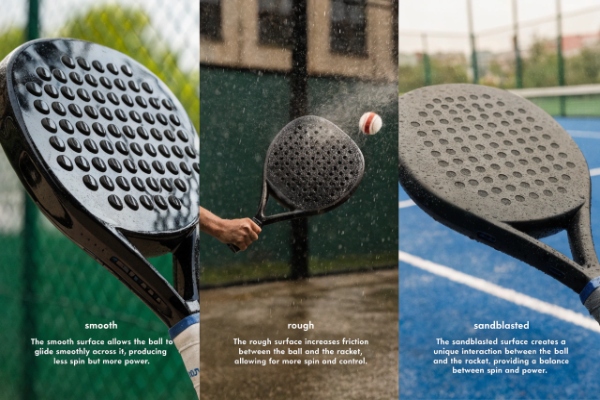
Padel racket surface technology refers to the texture and finish applied to the racket face. The main types are smooth, rough, and sandblasted. Each surface type changes how the ball grips the face at contact, which directly affects spin, control, and power output on every shot.
I have worked with padel racket production at PDK for years. Surface finish is one of the most discussed topics on our production floor. Small changes in surface texture produce clear differences in how a racket plays. I want to break this down in a way that is useful for both players choosing a racket and distributors deciding which surface types to carry in their range.
How Do Rough and Smooth Surfaces Change How a Racket Plays?
Walk into any padel shop and pick up two rackets. Run your finger across the face of each one. One will feel almost glassy. The other will feel like fine sandpaper. That difference is not cosmetic. It changes the game.
A rough surface1 creates more friction between the ball and racket face at the moment of contact. This friction allows the player to generate more spin. A smooth surface2 produces less friction, which means the ball leaves the face faster with less spin but more direct power and a cleaner, more predictable response.
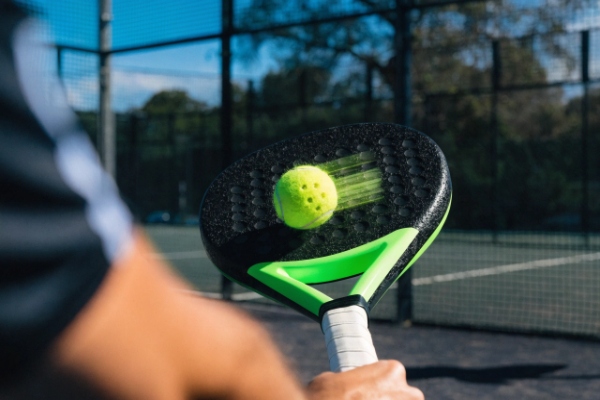
I tested this directly on court with two identical racket frames — same shape, same core, same weight. The only difference was the surface finish. The rough surface gave me noticeably more grip on the ball during slice shots and serves. The smooth surface felt faster and more direct on flat drives. Neither is better in an absolute sense. They suit different playing styles and different positions on court.
Which Surface Type Suits Which Playing Style?
The choice between rough and smooth is not just a feel preference. It links directly to how a player uses the racket during a game. Here is a structured breakdown.
| Surface Type | Friction Level | Spin Potential | Power Output | Best For | Court Position |
|---|---|---|---|---|---|
| Smooth | Low | Low | High | Flat attackers, power players | Net position, smash heavy |
| Rough | High | High | Medium | Spin players, defensive players | Back court, baseline rallies |
| Textured (3D pattern) | Medium–High | Medium–High | Medium | All-round players | Flexible, mid-court |
The position on court matters more than many players realize. A player who spends most of their time at the net does not need maximum spin generation. They need a fast, clean response on volleys and smashes. A smooth surface supports this. A player who spends time at the back wall, playing lobs and slice returns, benefits from the extra grip a rough surface provides.
At PDK, we produce rackets with three surface options for this reason. Distributors who carry all three can serve a much wider range of customers than those who stock only one type. I always recommend that new distributor clients order small quantities across surface types in their first batch. This lets them see which surface their market responds to before committing to a large volume order on a single specification.
One more point that is often missed: rough surfaces wear over time. The micro-texture that creates friction is a physical feature on the surface. With heavy use, it smooths out. This is not a defect. It is normal material behavior. Players who rely on spin should know that a racket’s spin performance gradually changes over its lifespan. This is a real factor in repurchase cycles3, and it matters to distributors thinking about repeat orders from their club customers.
How Does Surface Texture Enhance Spin Performance in Padel?
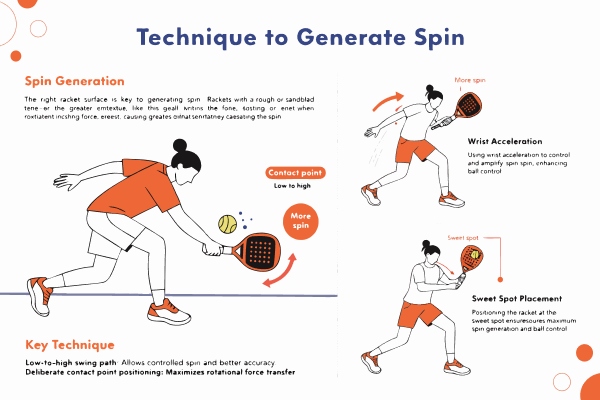
Spin in padel is not just a technique question. The racket surface is half of the equation. A player with perfect spin technique on a smooth racket will produce less spin than the same player on a properly textured surface.
Surface texture enhances spin4 by creating micro-contact points5 between the ball felt and the racket face. These micro-points grip the ball briefly during the swing, allowing the racket to drag across the ball surface and apply rotational force. More texture means more contact points, which means more spin potential.
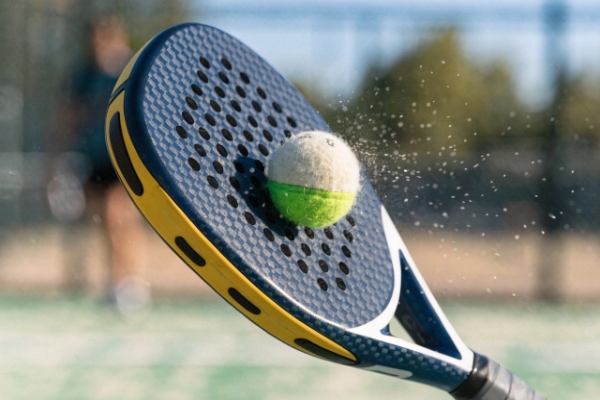
This is the same physics principle used in tire design. A tire with more surface contact grips the road better. A racket face with more micro-texture grips the ball better during the brief moment of contact. That moment is very short — under five milliseconds on most padel shots. But the texture still makes a measurable difference in what happens to the ball after it leaves the face.
What Surface Patterns Produce the Most Spin?
Surface texture in padel rackets is not random. Manufacturers use specific patterns to maximize the spin effect. Each pattern creates a different type of micro-friction.
| Surface Pattern | Texture Type | Spin Generation | Durability | Feel |
|---|---|---|---|---|
| Grit blast (fine) | Uniform micro-roughness | High | Medium | Gritty, grippy |
| Grit blast (coarse) | Larger rough peaks | Very high | Lower | Very grabby |
| Molded 3D pattern | Raised geometric shapes | Medium–High | High | Structured, consistent |
| Carbon weave exposed | Woven fiber texture | Medium | High | Firm, technical |
| Painted smooth | No texture | Low | High | Clean, fast |
The grit blast options produce the most spin but wear faster. The molded 3D pattern is more durable because the texture is built into the structure of the surface material rather than applied on top. This is a key difference in manufacturing terms. A blasted texture is a surface treatment. A molded texture is part of the surface itself. The molded version holds its properties longer under heavy use.
I saw this difference clearly when reviewing return rates from one of our distributor clients. Rackets with blasted surfaces had a slightly higher rate of customer complaints about performance drop after three to four months of regular play. Rackets with molded surface patterns6 had almost no complaints of this type. The product had not failed. The surface had just worn down, which is expected. But customers did not always understand this. Educating the end buyer about surface wear is something distributors can do at the point of sale. It manages expectations and reduces returns.
What Are Sandblasted Finishes and Why Do Modern Rackets Use Them?
Sandblasting is a surface treatment process7. It is used across many industries. In padel racket production, it has become one of the most common ways to add texture to a racket face. But not all sandblasted finish8es are the same.
A sandblasted finish on a padel racket is created by directing high-pressure abrasive particles at the racket face surface. This creates a uniform micro-rough texture across the face. The result is a surface that increases ball grip, improves spin generation, and gives the racket a premium matte visual appearance.
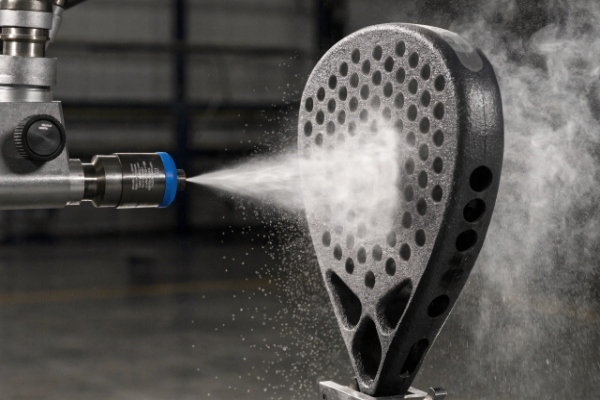
I have been on the production floor when sandblasting is carried out on racket batches at PDK. The process looks simple but the control required is significant. The pressure level, the particle size, the distance from the surface, and the duration of treatment all affect the final texture. Small changes in any of these produce different results. Consistency is the hard part.
Why Are Sandblasted Finishes Preferred in Premium Padel Rackets?
Sandblasted finishes have become standard in the mid-to-high-end padel racket market for several clear reasons. Here is how they compare to other common surface treatments.
| Surface Finish Method | Process | Spin Effect | Visual Result | Cost Level | Durability |
|---|---|---|---|---|---|
| Sandblasting (fine) | Abrasive particle blasting | High | Premium matte | Medium | Medium |
| Sandblasting (coarse) | Heavier abrasive blasting | Very high | Rough matte | Medium | Lower |
| Paint coat (smooth) | Standard painting | Low | Glossy or satin | Low | High |
| Carbon weave clear coat | Clear coat over raw carbon | Medium | Technical, premium | High | High |
| Molded texture | Built into mold design | Medium–High | Structured, consistent | High (tooling) | Very High |
The visual result of sandblasting is one reason it has become so popular in premium rackets. A matte finish looks and feels more expensive than a glossy painted surface. This matters to the end consumer in retail. A racket on a shop shelf that has a matte, textured face reads as more technical and serious than a glossy one. That visual signal affects purchasing decisions, even before the customer knows anything about the surface technology.
From a manufacturing perspective, sandblasting is also flexible. It can be applied after painting to create a matte texture over a colored base coat. It can be applied directly to the carbon or fiberglass surface for a raw, technical look. It can be controlled to different depths depending on the desired spin level. This flexibility makes it a strong choice for OEM and private-label production. A distributor who wants a premium-looking racket with strong spin performance, at a cost that supports healthy retail margins, will almost always end up with a sandblasted surface in their specification.
At PDK, sandblasted finishes are available across our full racket range. We can adjust the grit level based on the performance profile the distributor wants. Fine grit for a balanced spin-and-durability option. Coarse grit for maximum spin in a performance-focused range. This is the kind of specification control that separates a real manufacturing partner from a catalog supplier.
Conclusion
Padel racket surface technology is a direct performance factor, not a cosmetic detail. Rough surfaces add spin, smooth surfaces add speed, and sandblasted finishes deliver both premium feel and strong grip for modern players.
-
Explore how a rough surface enhances spin and grip, crucial for players who rely on slice shots and defensive play. ↩
-
Discover the advantages of a smooth surface for power players, offering faster ball response and cleaner shots. ↩
-
Gain insights into how racket wear affects player decisions and distributor strategies for repeat orders. ↩
-
Understanding how surface texture affects spin can help players choose the right racket for their game. ↩
-
Learn about micro-contact points to improve your spin technique and overall game performance. ↩
-
Explore the advantages of molded surface patterns for durability and performance in padel rackets. ↩
-
Gain insights into various surface treatments to understand their impact on performance and durability. ↩
-
Understanding sandblasted finishes can enhance your knowledge of racket performance and aesthetics. ↩