How Do You Improve Your Power Shots in Padel?
Many padel players hit the ball hard but still lack real power. Something is missing. Most of the time, the problem is not strength — it is technique and equipment.
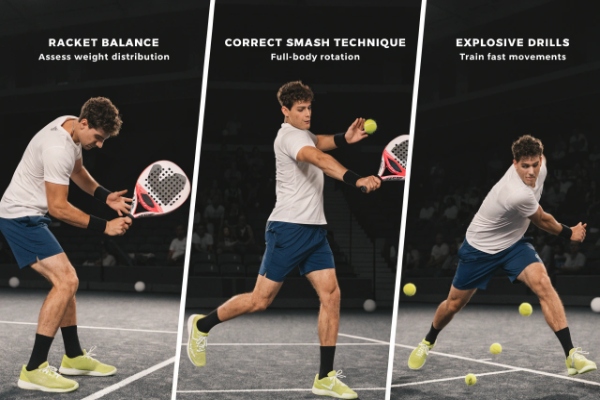
To improve power shots in padel, you need three things working together: the right racket balance for your play style, correct smash technique with full body rotation, and targeted drills that train explosive movement. Fixing any one of these will improve your power. Fixing all three will change your game.
I have worked with padel equipment for years. I have seen players switch rackets and immediately hit harder. I have also seen players with expensive rackets who still struggle with power. The racket matters. But so does the body. And so does practice with a clear goal. I want to break down each piece so you know exactly where to start.
Does Racket Balance Really Affect Your Power Shots?
Most players pick a racket based on looks or brand. Very few understand balance. But balance is one of the most direct factors in how much power you can produce on a shot.
Racket balance1 refers to where the weight sits on the racket. A top-heavy (head-heavy) racket puts more mass behind the hitting zone, which increases power on smashes and drives. A handle-heavy (handle-balanced) racket gives more control but less natural power.
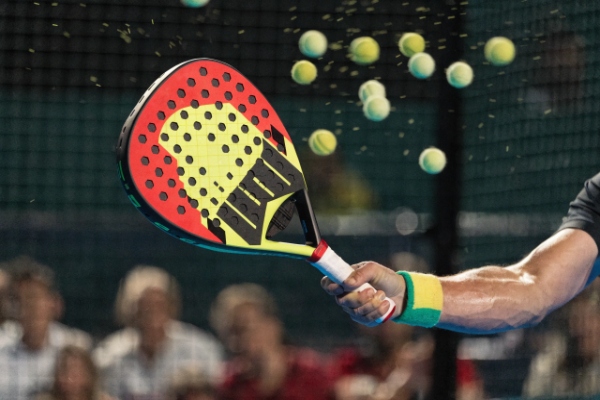
When I first started testing rackets for our production line at PDK, I was surprised by how much balance changed the feel of a shot. The weight did not change much between two rackets. But the balance point2 moved 15mm toward the head. The difference in punch on a smash was clear from the first hit.
How Do You Choose the Right Balance for Power?
Racket balance is measured from the handle end. Most padel rackets fall between 260mm and 290mm balance point. Anything above 270mm is generally considered head-heavy.
| Balance Type | Balance Point | Best For | Power Level | Control Level |
|---|---|---|---|---|
| Head-heavy | 275mm+ | Attackers, smash players | High | Lower |
| Even balance | 265–274mm | All-round players | Medium | Medium |
| Handle-heavy | Below 265mm | Defensive, technical players | Lower | High |
The shape of the racket also plays a role. A diamond-shaped racket3 concentrates weight at the top of the head. A round racket spreads weight more evenly. A teardrop shape sits between the two.
If your main goal is improving power shots, you should look for a diamond or teardrop-shaped racket with a balance point above 270mm. But there is a trade-off. Head-heavy rackets are harder to maneuver at the net. They require stronger wrist and shoulder stability. If you are a beginner or an intermediate player who plays a lot at the net, going straight to a heavy head-heavy racket4 may hurt your wrist or reduce your reaction speed. The right choice depends on your level, your position on court, and how often you smash. I always tell distributors who carry our PDK racket range to think about their end customer first. A club player who smashes twice a game needs a different racket than a competitive player who attacks from the back court every rally. Matching the balance to the player is the first step to unlocking real power.
What Is the Correct Technique for a Powerful Padel Smash?
Technique is where most players lose power. They swing with their arm. Real power comes from the body. The arm is just the final link in a chain that starts at the feet.
A powerful padel smash5 requires a full kinetic chain6: weight transfer from back foot to front foot, hip rotation7 before shoulder rotation, elbow leading the swing, and a clean contact point8 above and slightly in front of the head. The wrist snap at contact adds the final power.
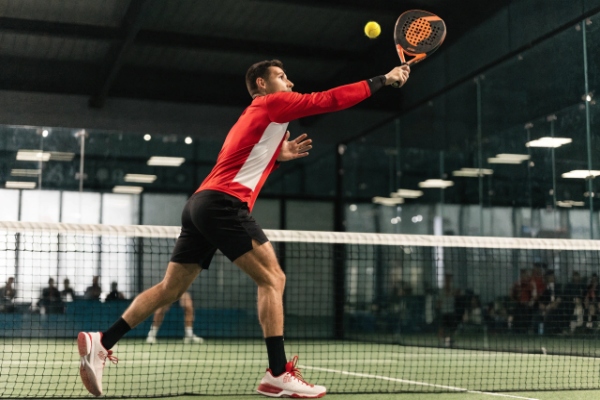
I have watched many amateur players smash. The most common mistake is this: they stand still and swing with just the arm. The ball goes fast but not hard. There is a difference. Speed without body weight behind it does not produce a true power shot.
How Does the Kinetic Chain Work in a Padel Smash?
The kinetic chain is a simple idea. Power starts at the ground, moves up through the legs, through the hips, through the shoulder, and finally through the arm and racket. Each part adds to the next. If one part stops, the chain breaks and power is lost.
| Body Part | Role in the Smash | Common Mistake |
|---|---|---|
| Feet | Generate ground force, set position | Standing flat-footed |
| Legs | Push up and forward | No leg drive |
| Hips | Rotate first, before shoulders | Rotating too late |
| Shoulders | Follow hips, pull arm through | Leading with the arm |
| Elbow | Leads the swing before wrist opens | Dropping the elbow |
| Wrist | Snaps through at contact | Locked or passive wrist |
| Contact point | Above and in front of the head | Too far behind or too low |
Every one of these checkpoints matters. Fixing your hip rotation alone can add significant power without changing anything else. I tested this myself on court. I focused only on rotating my hips earlier in the swing. The ball hit the back glass harder than it had in months. No change in strength. No change in racket. Just better sequencing.
The other key point is the contact position. Many players let the ball drop too low before hitting. A smash contacted at full extension above the head uses the full length of the arm as a lever. A smash contacted at shoulder height loses that lever advantage. Train yourself to move early and get under the ball before it drops. Position before power. That is the rule.
What Training Drills Do Professionals Use to Build Power Shots?
Knowing the technique is one thing. Building it into your body is another. Professionals do not just play more games to get more powerful. They train specific movements with specific drills.
Professional padel players build power through targeted drills: shadow smash repetitions without a ball, wall smash drills to train contact accuracy, and resistance band shoulder exercises9 to build the muscle groups used in the kinetic chain. These drills build both strength and muscle memory.
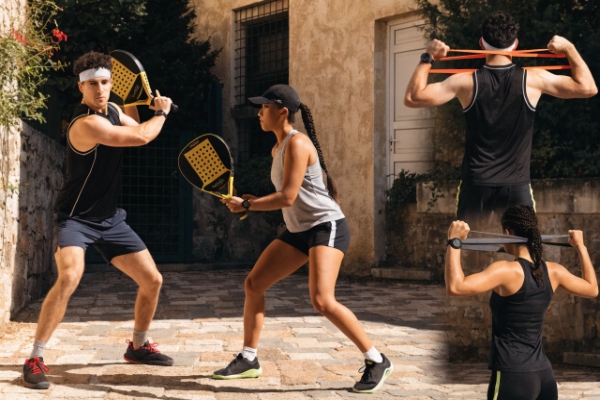
I have spoken with coaches at several clubs in Spain and the Netherlands. All of them say the same thing: most amateur players only train by playing. They never isolate the movements that produce power. Professionals do the opposite. They break the skill into small pieces and train each piece separately before putting it back together.
Which Drills Build the Most Power in Padel?
Here are the drills I see used most often at the club and professional level. Each one targets a specific part of the power smash.
| Drill | Target | How to Do It | Frequency |
|---|---|---|---|
| Shadow smash | Full kinetic chain, timing | Mimic smash motion without ball, focus on hip-first rotation | 3 x 15 reps, 3x per week |
| Wall smash repeats | Contact point, accuracy | Hit smashes to the back wall from mid-court, recover and repeat | 10 minutes per session |
| Toss and smash | Timing and positioning | Partner tosses high lobs, you position and smash | 20 reps per session |
| Resistance band rotation | Hip and shoulder strength | Attach band to a fixed point, rotate through the smash motion | 3 x 12 reps each side |
| Jump smash drill | Explosive leg drive | Jump before contact on every smash, land balanced | 10–15 reps per session |
The shadow smash is the one most players skip because it feels unnatural to swing without a ball. But it is the most valuable drill for fixing technique. Without the pressure of hitting a real ball, your brain can focus entirely on the body sequence. After two or three weeks of daily shadow smashes, the movement becomes automatic. Then when the ball comes, your body already knows what to do.
The resistance band work is also something many padel players ignore. They think gym training is for other sports. But the shoulder and rotator cuff muscles are used heavily in every smash. Weak rotator cuff muscles limit how fast you can rotate and how safely you can do it. Building that strength prevents injury and directly increases smash speed. At PDK, we always recommend that distributors pass this kind of information to their club clients. A player who trains well buys better equipment as they improve. That is good for everyone in the chain.
Conclusion
Power in padel comes from three places: the right racket balance, a clean kinetic chain in your smash, and drills that build both strength and muscle memory. Start with one and work through all three.
-
Understanding racket balance is crucial for optimizing your power shots and improving your game. ↩
-
Learn how the balance point affects your control and power, helping you choose the right racket. ↩
-
Discover why diamond-shaped rackets are favored for power shots and how they can elevate your game. ↩
-
Explore the advantages of head-heavy rackets to enhance your power and performance on the court. ↩
-
Explore this link to discover expert techniques that can elevate your padel smash and enhance your game. ↩
-
Understanding the kinetic chain is crucial for maximizing power in sports; this resource will deepen your knowledge. ↩
-
Learn how proper hip rotation can significantly improve your performance and power in various sports. ↩
-
This link provides insights on achieving the perfect contact point, essential for executing powerful smashes. ↩
-
Learn how resistance band exercises strengthen shoulder muscles, crucial for injury prevention and increasing smash speed. ↩