What Is the Difference Between a Padel Racket and a Pickleball Racket?
Many sports equipment distributors confuse padel and pickleball rackets, leading to incorrect product positioning and lost sales opportunities. These two racket sports look similar but require completely different equipment specifications.
Padel rackets are larger (455-460mm), heavier (360-390g), and perforated with no strings, while pickleball paddles are smaller (380-430mm), lighter (200-260g), and feature solid hitting surfaces. Each design serves distinct court sizes and playing styles.
I work with distributors across Europe and America who handle both sports equipment. Understanding these differences helps position products correctly and avoid costly inventory mistakes.
Padel Racket vs Pickleball Racket: Key Differences in Size and Shape
I’ve seen distributors order the wrong equipment because they assumed these rackets were interchangeable. This mistake can cost thousands in returned inventory and damage customer relationships.
Padel rackets measure 455-460mm in length with teardrop, round, or diamond shapes, while pickleball paddles range from 380-430mm with rectangular or elongated shapes. Padel rackets weigh 360-390g compared to pickleball’s lighter 200-260g range.
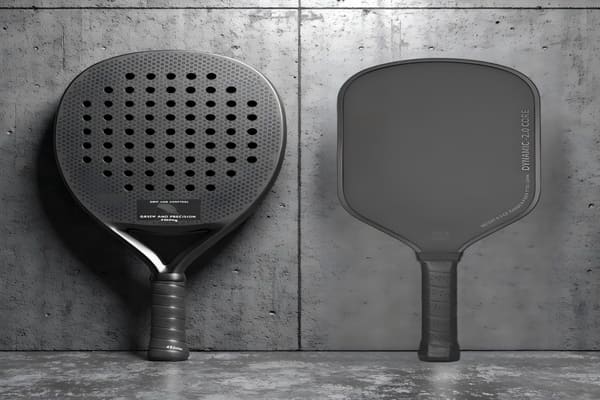
The physical specifications create entirely different playing experiences. Here’s the detailed breakdown:
Size and Shape Comparison
| Specification | Padel Racket | Pickleball Paddle |
|---|---|---|
| Length | 455-460mm | 380-430mm |
| Width | 260mm | 200-220mm |
| Thickness | 38mm | 13-19mm |
| Weight | 360-390g | 200-260g |
| Handle Length | 180-200mm | 127-140mm |
| Shape Options | Round/Teardrop/Diamond | Rectangular/Elongated |
The size difference relates directly to court dimensions and ball speed. Padel courts measure 20m x 10m with faster gameplay requiring larger racket heads for better reach. Pickleball courts are smaller at 13.4m x 6.1m, allowing players to use compact paddles for quick reactions.
Handle length varies significantly between the two sports. Padel rackets feature longer handles supporting two-handed backhand shots common in the game. Pickleball paddles have shorter grips designed primarily for one-handed play with occasional two-handed control shots.
Weight distribution affects playing style dramatically. Padel rackets balance between 260-280mm from the handle base, creating head-light or head-heavy options for different techniques. Pickleball paddles typically balance around 190-210mm, providing quick maneuverability for net play.
Material and Construction Differences Between Padel and Pickleball Rackets
Many buyers focus only on price without understanding construction quality. This leads to high return rates and customer complaints about performance issues.
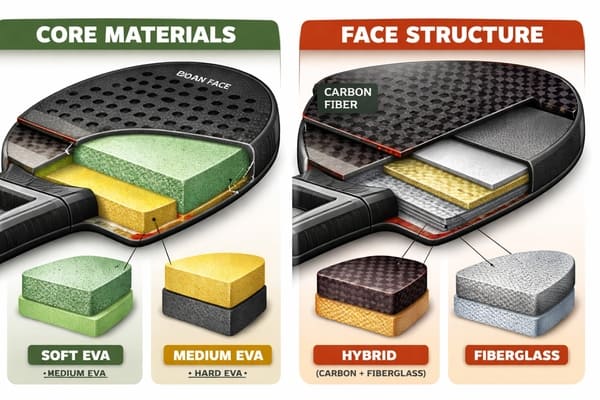
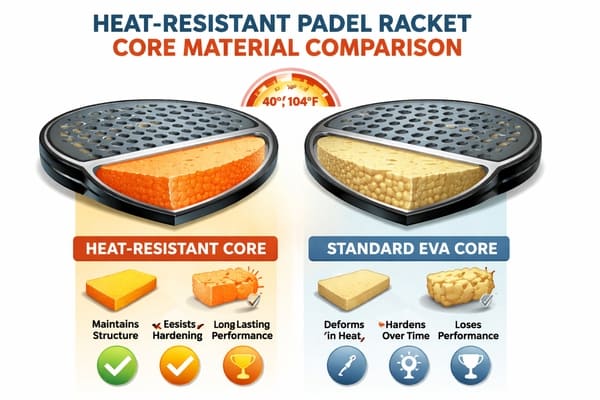
Padel rackets use carbon fiber frames (3K-12K) with EVA or foam cores, featuring multiple drilled holes for aerodynamics. Pickleball paddles employ polymer cores, graphite, or fiberglass faces with solid surfaces and edge guards for durability.
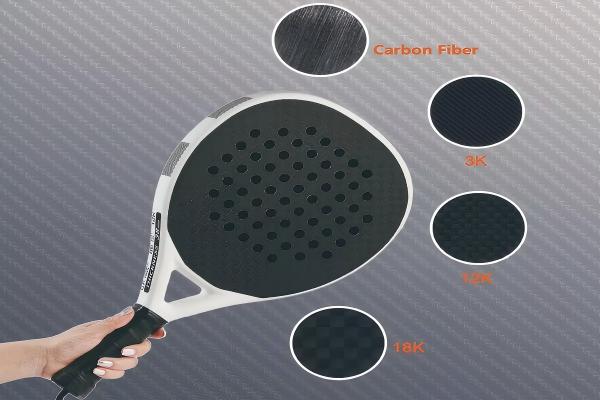
Construction methods directly impact performance, durability, and manufacturing costs. Here’s what I’ve learned from producing both products:
Material Specifications
| Component | Padel Racket | Pickleball Paddle |
|---|---|---|
| Face Material | 3K/6K/12K Carbon Fiber | Graphite/Fiberglass/Carbon |
| Core Material | Soft/Medium/Hard EVA Foam | Polymer/Nomex/Aluminum Honeycomb |
| Surface Type | Perforated (80-90 holes) | Solid/Textured |
| Frame Construction | Integrated carbon frame | Edge guard protection |
| Handle Material | EVA foam grip | Cushioned grip/Perforated |
The hole pattern in padel rackets serves multiple purposes beyond aesthetics. These perforations reduce air resistance during swings, allowing faster racket head speed. They also affect the racket’s flexibility and sweet spot size. Our standard pattern uses 88 holes arranged symmetrically for optimal performance.
Pickleball paddle cores vary more than padel racket cores. Polymer cores provide excellent control and soft feel, ideal for beginners. Nomex cores offer harder response with more power for aggressive players. Aluminum honeycomb cores balance weight and performance at competitive price points.
Surface texture matters differently for each sport. Padel rackets use smooth carbon surfaces or 3D textured patterns for spin generation. Pickleball paddles feature rough textures or specialized coatings approved by USA Pickleball regulations for consistent ball interaction.
Manufacturing tolerances differ significantly between products. Padel rackets allow thickness variation of ±2mm, while pickleball paddles must meet strict USAPA specifications with maximum thickness of 19.05mm for tournament play. This affects production processes and quality control requirements.
How Padel and Pickleball Rackets Affect Gameplay and Performance
Players switching between sports often struggle because they try using similar techniques with fundamentally different equipment. Understanding these performance differences helps target the right customer segments.
Padel rackets generate more power through longer swing paths and heavier weight, requiring glass wall rebounds and overhead smashes. Pickleball paddles prioritize quick reactions with lighter weight for rapid volleys and precise dinking at the net.
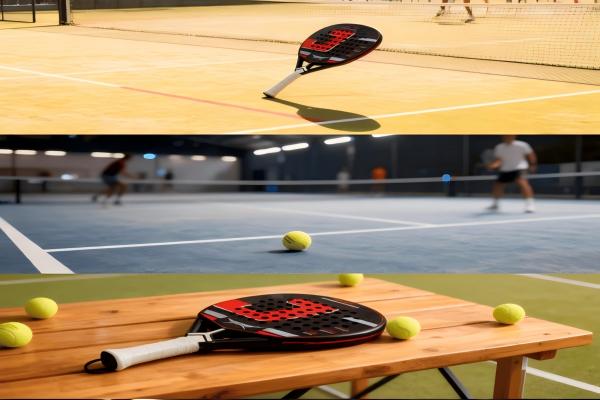
The equipment design reflects each sport’s unique characteristics and playing strategies:
Performance Impact Analysis
-
Power Generation:
- Padel: Heavy racket (360-390g) creates momentum for powerful smashes
- Pickleball: Light paddle (200-260g) relies on wrist snap for power
- Padel allows longer backswing due to larger court space
- Pickleball requires compact swings for quick net exchanges
-
Control and Precision:
- Padel: Larger sweet spot accommodates wall rebounds
- Pickleball: Smaller paddle demands precise contact point
- Padel perforations affect spin generation
- Pickleball textured surfaces create consistent ball grip
-
Playing Style Requirements:
- Padel: Two-handed backhands common with longer handles
- Pickleball: One-handed control with shorter grips
- Padel emphasizes overhead play and wall strategy
- Pickleball focuses on soft game and net dominance
Ball interaction differs completely between sports. Padel balls resemble tennis balls with lower pressure, requiring racket holes to manage air resistance during fast swings. Pickleball uses plastic wiffle-type balls with holes, needing solid paddle surfaces for consistent contact.
Spin capabilities vary dramatically. Padel rackets with rough surfaces or 3D textures can impart significant topspin and slice. Pickleball paddles generate less spin due to smoother surfaces and ball construction, though textured paddles improve spin potential within regulation limits.
Durability expectations change based on playing surface. Padel rackets must withstand wall impacts and ground scrapes on artificial turf courts. Pickleball paddles face less impact stress but require edge guard protection from hard court surfaces and net posts.
Market positioning requires understanding these performance differences. Padel equipment targets players seeking intensive, athletic gameplay with court investment requirements. Pickleball equipment appeals to recreational players wanting accessible, social sport with minimal space needs.
Conclusion
Padel rackets and pickleball paddles serve entirely different sports with distinct size, construction, and performance requirements. Understanding these differences ensures proper product positioning, inventory planning, and customer satisfaction for equipment distributors.