Top Trends in Padel Rackets for 2026: What Distributors Should Know
Distributors struggle to predict which racket features will dominate markets as player preferences evolve rapidly. Investing in wrong product lines ties up capital in slow-moving inventory while competitors capture emerging trends.
The 2026 padel racket market will focus on eco-friendly materials, hybrid construction techniques, smart technology integration, and customization options. Distributors should stock 40% classic designs, 35% innovative models, and 25% premium tech-enhanced rackets to match diverse player segments and maximize revenue potential.
The successful buyers balance innovation adoption with proven sellers, avoiding the extremes of outdated catalogs or excessive risk-taking.
Which Materials Will Lead Padel Racket Innovation in 2026?
Many distributors assume carbon fiber will continue dominating racket construction without considering emerging material technologies. This narrow view prevents them from identifying differentiation opportunities that command premium pricing.
Advanced carbon composites, recycled materials1, graphene-enhanced structures2, and bio-based resins3 will lead 2026 padel racket innovation. The market will split between performance-focused materials offering 15-20% improved specifications and sustainability-focused options4 meeting growing environmental demands from players and regulators.
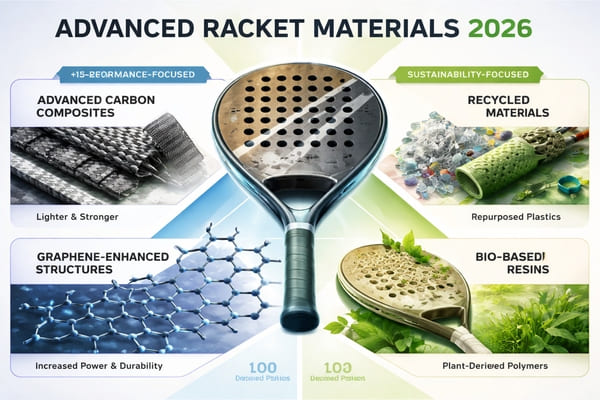
Material innovation drives both performance improvements and market differentiation. Here’s what will shape 2026 offerings:
Material Innovation Forecast
| Material Category | Key Features | Target Segment | Price Premium |
|---|---|---|---|
| 18K Carbon Fiber | Ultra-lightweight, superior stiffness | Professional players | 25-35% |
| Graphene Composite | Enhanced durability, vibration damping | Advanced intermediates | 20-30% |
| Recycled Carbon | Sustainability focus, good performance | Eco-conscious players | 15-25% |
| Bio-Based Resin | Reduced carbon footprint, standard performance | Club players | 10-15% |
| Hybrid Construction | Multiple materials optimized by zone | Performance seekers | 30-40% |
Advanced carbon fiber grades will push performance boundaries beyond current standards. The shift from standard 12K to 18K carbon fiber weaves provides 15-20% weight reduction while maintaining structural integrity. At PDK, we’re developing 18K carbon layup techniques that produce rackets weighing 340-350 grams versus typical 365-375 gram models. This weight reduction improves maneuverability without sacrificing power, appealing to aggressive players seeking faster swing speeds.
Graphene integration creates the next evolution in composite materials. Adding 0.5-1% graphene to carbon fiber laminates increases tensile strength by 20% while improving impact resistance. More importantly, graphene’s thermal conductivity properties distribute vibration energy across the racket face, reducing uncomfortable feedback on off-center hits. We project 25-30% of premium rackets will incorporate graphene by late 2026.
Sustainability materials respond to environmental regulations and consumer preferences. European markets especially demand eco-friendly options as younger players prioritize sustainability. Recycled carbon fiber from aerospace and automotive industries offers 70-80% of virgin carbon performance at 30-40% lower environmental impact. Bio-based epoxy resins derived from plant oils replace petroleum-based alternatives with minimal performance compromise.
The recycled material challenge involves maintaining consistency across batches. Unlike virgin materials with predictable properties, recycled carbon varies based on source material and processing methods. Professional factories invest in advanced testing and blending protocols to standardize recycled carbon performance. At PDK, we batch-test recycled carbon fiber and blend multiple sources to achieve consistent specifications that meet player expectations.
Bio-resin adoption accelerates as chemical companies improve formulations. Current bio-resins cure slower and show 5-10% lower impact strength compared to traditional epoxy. However, 2025-2026 generation bio-resins close this gap to within 2-3% performance difference. The slightly higher material cost (15-20% premium) gets offset by marketing value and regulatory advantages in environmentally strict markets.
Hybrid construction techniques combine different materials in strategic zones for optimized performance. High-modulus carbon in the striking area provides power and control. More flexible carbon or fiberglass in the frame absorbs shock and improves comfort. Aramid fiber reinforcement at high-stress points prevents structural failure. This zone-optimized approach delivers performance previously impossible with single-material construction.
Smart material integration begins emerging in premium segments. Shape-memory polymers in the racket core adjust stiffness based on temperature, maintaining consistent feel across playing conditions. Piezoelectric materials embedded in the frame generate small electrical charges from ball impact, powering embedded sensors without batteries. These technologies remain expensive in 2026 but signal future development directions.
What Racket Designs Will Players Prefer in 2026?
Distributors often copy competitor designs without understanding underlying player preference shifts. This reactive approach misses emerging design trends that create differentiation and customer loyalty.
Players in 2026 will prefer rackets with hybrid shapes5 balancing power and control, larger sweet spots through optimized weight distribution, textured surfaces6 for spin generation, and adjustable balance systems. Design trends split between aggressive attack-oriented geometries for younger players and comfortable control-focused shapes for growing senior segments.
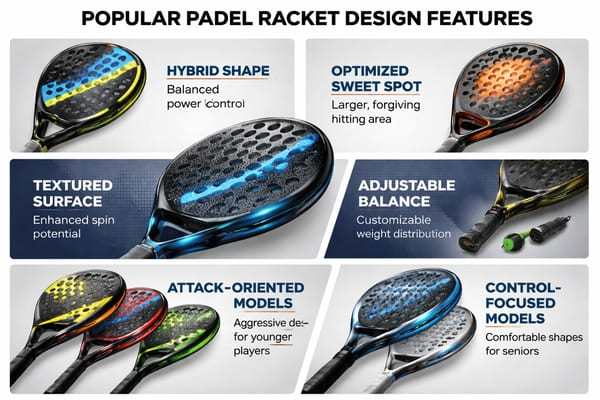
Design preferences reflect both performance requirements and aesthetic expectations. Here’s the detailed forecast:
Design Preference Analysis
-
Shape Evolution Trends:
- Hybrid diamond-round shapes: 45% market share
- Traditional round shapes: 30% market share
- Pure diamond shapes: 20% market share
- Teardrop variants: 5% market share
- Sweet spot optimization drives design choices
- Balance between power and control becomes critical
-
Weight Distribution Innovation:
- High balance (275-280mm): Decreasing to 25% share
- Mid balance (265-270mm): Growing to 50% share
- Low balance (255-260mm): Stable at 25% share
- Adjustable weight systems: Emerging in 15% of premium models
- Customization options increase customer satisfaction
- Weight kits allow post-purchase adjustment
-
Surface Technology Development:
- Textured 3D surfaces: 40% of new models
- Smooth traditional finishes: 35% of offerings
- Rough sandpaper-like surfaces: 15% premium segment
- Hybrid smooth-textured zones: 10% innovation category
- Spin generation becomes key differentiator
- Durability concerns require advanced coatings
The hybrid shape trend addresses the false choice between power and control. Traditional round rackets offer large sweet spots and comfort but lack power for finishing shots. Diamond shapes provide explosive power but punish mis-hits with harsh vibration. Hybrid designs position the sweet spot 3-5cm higher than round rackets while maintaining 15-20% larger sweet spots than pure diamonds. At PDK, our 2026 hybrid designs achieve this through asymmetric hole patterns and graduated frame thickness.
Sweet spot optimization uses computer modeling and player testing to maximize the effective hitting area. We analyze thousands of recreational player swings to identify actual contact points rather than assuming perfect center hits. This data reveals most players contact balls 2-3cm off-center toward the racket tip. Optimizing hole density and frame stiffness around actual hit zones improves perceived performance more than expanding the geometric center.
Balance point adjustability addresses the reality that player preferences change with skill development and playing style evolution. A player buying an aggressive high-balance racket might shift toward control-oriented play after six months. Removable weight systems in the racket handle and tip allow 10-15mm balance point adjustment. This feature extends product lifecycle and improves customer satisfaction, reducing returns and negative reviews.
Surface texturing creates spin generation7 advantages that separate advanced from recreational rackets. Smooth surfaces produce 15-20% less ball rotation compared to textured alternatives. Three-dimensional surface patterns with 0.5-1.5mm raised elements grab ball surfaces during glancing contact, imparting rotation. The challenge involves balancing spin enhancement with durability—aggressive textures wear quickly under intense play. Our 2026 designs use ceramic-reinforced polymer textures lasting 200+ playing hours.
Aerodynamic frame shaping reduces air resistance during swing acceleration. Traditional racket frames create significant drag, limiting swing speed for players with moderate strength. Teardrop-shaped frame cross-sections and beveled edges reduce drag by 10-15%, translating to 3-5% faster swing speeds. This seemingly small improvement significantly impacts shot power and reaction time at net.
Color and graphics trends shift toward minimalist, premium aesthetics. The 2020-2024 era’s bright, busy graphics give way to subtle color gradients, metallic finishes, and refined branding. Younger players prefer matte black or dark colors with accent details, while traditional players accept brighter options. Customization through color choice becomes standard even at mid-price points, with manufacturers offering 3-5 colorways per model.
Grip integration improvements focus on comfort and moisture management8. Traditional polyurethane overgrips absorb sweat but lose tackiness and require frequent replacement. New perforated grip materials with moisture-wicking channels maintain dry feel throughout matches. Some premium models integrate antimicrobial treatments preventing odor development. Replaceable grip systems simplify maintenance while reducing waste.
How Can Distributors Prepare for 2026 Market Demand?
Most distributors order inventory based on past sales patterns without anticipating market shifts. This backward-looking approach leaves them understocked on emerging trends9 while holding excess obsolete inventory.
Distributors should prepare for 2026 by diversifying inventory across performance segments, securing early commitments with innovative manufacturers, building demo programs10 for new technologies, and educating retail partners on emerging features. Allocate 40% budget to proven bestsellers, 35% to incremental innovations, 20% to breakthrough technologies, and 5% to experimental offerings.
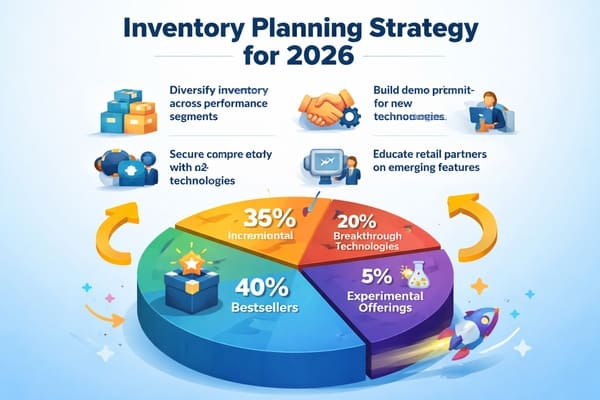
Strategic preparation requires balancing risk across multiple dimensions. Here’s my recommended approach:
Market Preparation Framework
| Preparation Area | Action Items | Investment Level | Expected Outcome |
|---|---|---|---|
| Product Portfolio | Diversify across 3-4 price tiers | 40% of budget | Risk mitigation |
| Supplier Relations | Lock early 2026 production slots | 10% deposit commitment | Priority access |
| Demo Inventory | Stock 20-30 test rackets | 5% of budget | Trial conversion |
| Staff Training | Educate on new technologies | 3% of budget | Better selling |
| Marketing Content | Create trend-focused campaigns | 7% of budget | Customer awareness |
Portfolio diversification prevents concentration risk when specific products underperform. The 40-35-20-5 allocation strategy balances safety with innovation. Your 40% core allocation goes to established bestsellers with predictable demand—classic round shapes, standard carbon construction, proven price points. These products provide cash flow stability and satisfy traditional customer segments resistant to change.
The 35% incremental innovation category includes products adopting proven technologies from premium segments. Examples include mid-price rackets incorporating basic graphene enhancement, textured surfaces on club-level models, and hybrid shapes at accessible price points. These products attract customers wanting modern features without premium pricing, representing the growth sweet spot for most distributors.
Breakthrough technology allocation (20%) positions you for market shifts while limiting downside risk. This category includes rackets with adjustable balance systems, advanced bio-materials, smart technology integration, or radical design departures. Some products will fail, but successful innovations generate outsized profits and brand positioning. At PDK, we help distributors identify which breakthrough technologies match their specific market characteristics.
The experimental 5% allows learning without significant financial exposure. Test ultra-premium segments, niche designs, or unproven technologies. Treat these offerings as market research investments rather than profit centers. Customer feedback from experimental products guides future mainstream offerings while demonstrating your brand’s innovation leadership.
Early manufacturer commitments secure production capacity before peak season. Professional factories allocate 2026 production capacity during Q3-Q4 2025. Distributors waiting until Q1 2026 face limited slot availability, longer lead times, and reduced customization flexibility. At PDK, customers placing 2026 orders before October 2025 receive priority scheduling and 5-10% better pricing through early commitment discounts.
Demo program development drives adoption of unfamiliar technologies. Players hesitate buying expensive rackets with features they don’t understand. Comprehensive demo programs with 20-30 test rackets across model ranges let customers experience innovations firsthand. Structure demo programs with 7-14 day trial periods, damage waivers, and conversion incentives. Successful demos convert at 35-45% rates versus 8-12% for traditional sales approaches.
Staff education transforms retail teams into trusted advisors rather than order-takers. Train employees on material differences, design benefits, and player matching criteria. Provide comparison charts, feature explanation scripts, and demonstration techniques. Educated staff increase average transaction value by 25-30% through better product matching and confidence in recommending premium options.
Marketing content creation builds demand for innovations before inventory arrives. Develop blog posts, videos, and social media content explaining 2026 trends, material benefits, and technology advantages. Position your brand as the informed source for cutting-edge products. Start content campaigns 3-4 months before product availability to build awareness and anticipation.
Retail partner education extends your capabilities through distribution channels. Many retailers lack technical knowledge about padel equipment innovations. Provide training materials, product comparison guides, and selling tools helping retail staff confidently present new technologies. Consider joint promotions or demo day events bringing your expertise directly to retail locations.
Inventory management systems require upgrading for increased product complexity. SKU counts will increase 30-40% as manufacturers offer more variants, colors, and customization options. Implement inventory software tracking product attributes, performance characteristics, and customer preferences. This data identifies which specific variants sell versus languishing in stock.
Pricing strategy must reflect value differentiation between technology levels. Avoid compressing margins on innovative products just because manufacturing costs remain similar. Premium technologies justify 20-40% price increases even when production costs rise only 10-15%. Customers pay for performance benefits and innovation, not just material costs. Position breakthrough products as premium offerings commanding appropriate pricing.
Conclusion
The 2026 padel racket market will reward distributors who balance proven products with emerging innovations in materials, design, and technology. Success requires strategic portfolio allocation, early manufacturer partnerships, comprehensive demo programs, and educated sales teams that help players navigate increasing product complexity and find optimal equipment matches.
-
Discover the environmental and performance advantages of recycled materials in the production of padel rackets. ↩
-
Learn how graphene technology enhances durability and performance in sports gear, including padel rackets. ↩
-
Understand how bio-based resins contribute to sustainability in sports equipment manufacturing. ↩
-
Explore the growing trend of sustainability in sports equipment and how it affects consumer choices. ↩
-
Explore how hybrid shapes enhance performance by balancing power and control, making them ideal for diverse player preferences. ↩
-
Discover how textured surfaces improve spin generation, a key factor for players looking to enhance their game. ↩
-
Discover the latest advancements in spin technology that can give you a competitive edge on the court. ↩
-
Learn about innovative grip technologies that enhance comfort and performance during intense matches. ↩
-
Find resources that help you stay ahead of emerging trends, ensuring your inventory meets future demands. ↩
-
Learn how to design demo programs that enhance customer experience and drive product adoption effectively. ↩