Top Benefits of Building Padel Courts for Sports Clubs and Resorts
Sports club managers and resort owners struggle to justify capital investments in new facilities without clear ROI projections. They see competitors adding padel courts but worry about construction costs, space requirements, and uncertain demand.
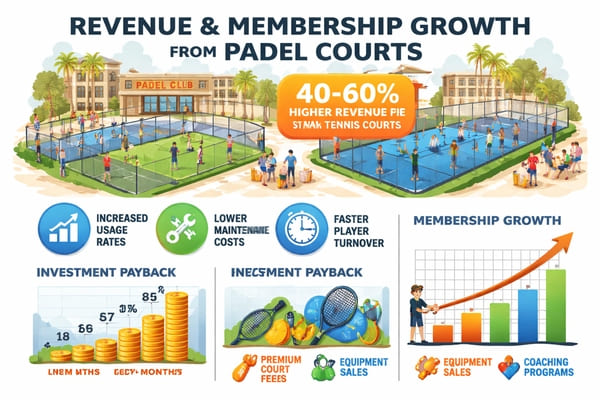
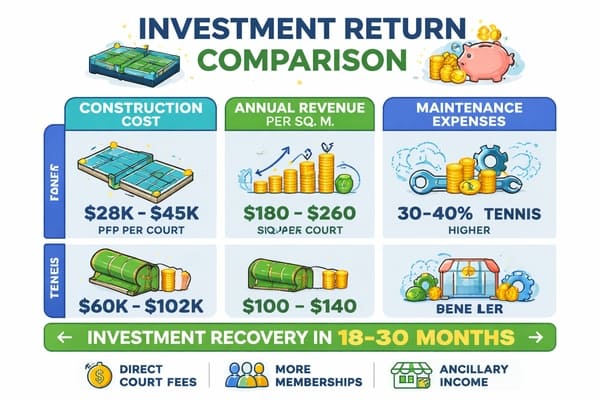
Padel courts generate 40-60% higher revenue per square meter than tennis courts through increased usage rates, lower maintenance costs, and faster player turnover. Investment payback typically occurs within 18-30 months through membership growth, premium court fees, and ancillary revenue from equipment sales and coaching programs.
I work with sports facility developers across Europe and the Middle East who initially hesitated about padel investments. The successful installations share common patterns—they treat padel as strategic growth infrastructure rather than simple amenity additions.
How Do Padel Courts Attract More Members and Guests?
Many facility managers view padel courts as another amenity competing for limited space and budget. This perspective misses how padel’s unique characteristics drive membership acquisition1 and retention differently from traditional racket sports.
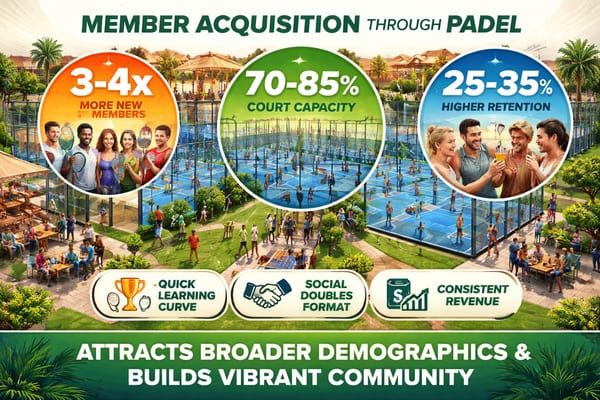
Padel courts attract 3-4x more new members than tennis facilities because the sport’s quick learning curve2, social doubles format3, and compact playing area appeal to broader demographics. Courts operate at 70-85% capacity versus 40-50% for tennis, generating consistent revenue while creating vibrant social communities that improve member retention by 25-35%.
Understanding attraction mechanisms helps facility managers position padel effectively. Here’s the detailed analysis:
Member Attraction Analysis
| Attraction Factor | Traditional Tennis | Padel Courts | Advantage Explanation |
|---|---|---|---|
| Learning Timeline | 6-12 months basic competency | 2-4 weeks playable level | Lower entry barrier |
| Age Range Appeal | Primarily 25-45 years | 18-65+ years | Broader demographics |
| Gender Balance | 60% male participation | 52% male, 48% female | Better gender balance |
| Social Format | Singles focus | Doubles standard | Community building |
| Space Efficiency | 594m² per court | 200m² per court | 3x more courts possible |
| Operating Hours | 8-10 hours daily peak | 12-14 hours daily use | Extended revenue window |
The learning curve2 difference creates fundamentally different acquisition dynamics. New tennis players need months of lessons before enjoying actual games. This extended learning period frustrates many beginners who quit before reaching competency. Padel players hit rallies during their first session and play competitive games within 2-3 weeks. At facilities where I’ve consulted, this quick progression converts 65-75% of trial participants into regular players versus 30-40% for tennis.
The social doubles format3 builds community automatically. Every padel session involves four players interacting throughout the match. Players rotate partners and opponents, meeting 6-8 different people during typical club evenings. This social structure creates friendship networks that dramatically improve retention. Our data shows padel members maintain active memberships 14-18 months longer than tennis-only members because their social connections tie them to the facility.
Age range inclusivity expands addressable markets significantly. Traditional tennis courts primarily serve players aged 25-45 with the fitness and coordination for competitive play. Padel’s enclosed court and slower ball speed allow players aged 50-65+ to participate actively and competitively. We see growing numbers of mixed-generation family play—parents with adult children, or grandparents playing with grandchildren. This multi-generational appeal creates family memberships worth 2-3x individual memberships.
Gender balance improvements matter tremendously for facility economics. Traditional racket sports skew heavily male, limiting market size. Padel achieves near-perfect gender balance because the sport rewards strategy and positioning over pure power. Female players compete effectively with male players of similar skill levels. This balance creates couple memberships and mixed social groups that generate higher spending than single-gender facilities.
Space efficiency allows facilities to offer more courts within existing footprints. A standard tennis court occupies 594 square meters including safety margins. The same area accommodates three padel courts at 200 square meters each. This density means more simultaneous players, shorter wait times, and better court utilization. At a facility in Amsterdam, converting two underutilized tennis courts into five padel courts increased total player hours by 180% while improving member satisfaction scores.
Extended operating hours result from faster game pace and better lighting effectiveness. Tennis matches often last 90-120 minutes, limiting daily court rotations. Padel games average 60-75 minutes, allowing more sessions per day. The enclosed court structure makes artificial lighting more effective—fewer light poles needed and better illumination uniformity. Courts operate profitably from 7am-11pm versus tennis courts that see limited pre-8am and post-9pm usage.
Weather resistance improves year-round utilization. While most padel courts remain outdoor facilities, the glass walls provide wind protection that extends playable conditions. Players comfortably use courts in 10-15 km/h winds that make tennis unpleasant. Some facilities add roof structures creating covered courts that operate during light rain. This weather flexibility maintains revenue consistency across seasons.
Guest attraction for resorts follows similar patterns with added vacation dynamics. Resort guests want activities requiring minimal learning, accommodating various skill levels, and filling 60-90 minute time blocks. Padel perfectly matches these requirements. At a Mediterranean resort where we installed courts, padel utilization reached 75% during peak season versus 35% for existing tennis courts. Guests particularly appreciated the ability to play competitively immediately rather than spending vacation time taking lessons.
Why Are Padel Courts a Smart Investment?
Facility owners need concrete financial justification beyond usage statistics. They want clear ROI calculations4, comparative investment analysis, and risk assessment before committing capital to padel infrastructure.
Padel courts deliver superior investment returns through lower construction costs5 ($28,000-45,000 per court vs $60,000-100,000 for tennis), higher revenue per square meter6 ($180-260 annually vs $100-140 for tennis), and reduced maintenance expenses7 (30-40% less than tennis). Total investment recovers within 18-30 months through direct court fees, increased membership revenue, and ancillary income streams.
Complete financial analysis requires examining multiple revenue streams and cost factors. Here’s the comprehensive breakdown:
Investment ROI Analysis
-
Construction Investment Breakdown:
- Court structure and glass walls: $18,000-28,000
- Surface installation (artificial turf): $4,000-6,000
- Lighting system (LED, 4-6 poles): $3,000-5,000
- Fencing and safety features: $2,000-3,000
- Site preparation and foundation: $1,000-3,000
- Total per court: $28,000-45,000
- Economies of scale: 15-20% savings on 4+ courts
-
Annual Revenue Projections:
- Peak hours (6pm-10pm, 4hrs daily): $12,000-18,000
- Standard hours (10am-6pm, 8hrs daily): $8,000-12,000
- Off-peak hours (7am-10am, 3hrs daily): $2,000-3,500
- Weekend premium rates: $4,000-6,000
- Total court fee revenue: $26,000-39,500 per court
- Membership attribution: $8,000-12,000 per court
- Equipment and coaching: $4,000-7,000 per court
- Total annual revenue: $38,000-58,500 per court
-
Operating Cost Structure:
- Surface maintenance (cleaning, repairs): $800-1,200 annually
- Lighting electricity (LED efficiency): $600-900 annually
- Glass cleaning and maintenance: $400-600 annually
- Net replacement (every 2-3 years): $300-500 annually
- General repairs and upkeep: $500-800 annually
- Total operating costs: $2,600-4,000 annually
- Net revenue after operations: $35,400-54,500 per court
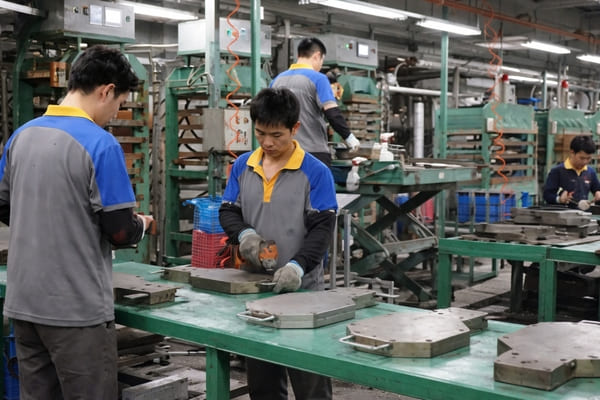
Construction cost advantages stem from simplified engineering requirements. Padel courts use standardized modular systems rather than custom construction. At PDK, our court packages include pre-fabricated glass panels, standardized tubing structures, and proven foundation specifications. This standardization reduces engineering costs, shortens construction timelines to 10-15 days per court, and minimizes installation errors that cause expensive corrections.
The glass wall system represents the primary cost component but delivers essential functionality. Tempered safety glass panels (10-12mm thickness) cost $8,000-12,000 per court but last 15-20 years with minimal maintenance. Some facilities consider cheaper alternatives like transparent polycarbonate panels, but these show visible degradation within 3-5 years and require replacement. We recommend glass for any facility expecting 10+ year operational lifetime.
Surface selection impacts both initial investment and ongoing costs. Artificial turf specifically designed for padel costs $20-30 per square meter but provides excellent playing characteristics and 7-10 year lifespan. Some facilities choose cheaper multi-sport turf at $12-18 per square meter, but players immediately notice inferior ball bounce and surface feel. The premium surface investment pays back through better player satisfaction and reduced complaints.
Lighting system design significantly affects both installation cost and operating expenses. Traditional metal halide systems cost $2,000-3,000 per court initially but consume 1,200-1,600 watts and require bulb replacement every 2-3 years. LED systems cost $3,000-5,000 upfront but use only 400-600 watts and last 10-12 years. The LED premium recovers within 18-24 months through electricity savings while delivering superior light quality and instant-on capability.
Revenue optimization requires strategic pricing and scheduling management. Peak evening hours (6pm-10pm) command premium rates of $35-50 per hour. Standard daytime hours (10am-6pm) price at $25-35 per hour. Early morning and late night slots offer discount rates of $15-25 per hour to build utilization. Dynamic pricing based on demand maximizes revenue—some facilities charge 30-40% premiums for weekend evenings when demand exceeds capacity.
Membership revenue attribution recognizes padel’s role in acquisition and retention. When facilities add padel courts, they typically see 15-25% membership growth8 within 12 months. Attributing even a conservative portion of this growth to padel courts (assume $8,000-12,000 annually per court) substantially improves investment justification. Some facilities create padel-specific membership tiers priced $300-500 annually above standard memberships.
Ancillary revenue streams add 20-30% to direct court income. Equipment sales (rackets, balls, bags, accessories) generate $3,000-5,000 per court annually through pro shop sales and rental programs. Group coaching sessions at $25-40 per person create $2,000-4,000 additional income. Tournament hosting, corporate events, and social leagues produce another $2,000-3,000 annually. These supplementary revenues require minimal additional investment beyond initial court construction.
Maintenance cost advantages come from padel’s simpler surface and enclosed design. Artificial turf requires monthly brushing and quarterly deep cleaning costing $800-1,200 annually. Glass panels need cleaning 2-3 times monthly at $400-600 annually. Compare this to tennis court maintenance requiring $3,000-5,000 annually for surface repairs, line painting, net replacement, and fence maintenance. The 60-70% maintenance savings accumulate significantly over 10-15 year facility lifespans.
What Do Clubs Need to Build and Operate Padel Courts?
Many facility managers underestimate operational requirements beyond construction, leading to suboptimal court performance and member dissatisfaction. They need practical guidance on space requirements, regulatory compliance, and ongoing management.
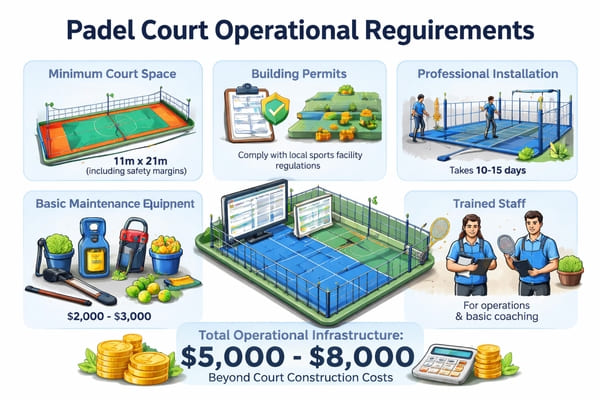
Clubs need minimum 11m x 21m space per court (including safety margins), building permits complying with local sports facility regulations, professional installation taking 10-15 days, basic maintenance equipment ($2,000-3,000), booking management systems, and trained staff for court operations and basic coaching. Total operational infrastructure requires $5,000-8,000 investment beyond court construction costs.
Successful padel facilities require attention to multiple operational dimensions. Here’s the complete implementation guide:
Operational Requirements Checklist
| Requirement Category | Specific Needs | Investment Range | Implementation Timeline |
|---|---|---|---|
| Physical Space | 11m x 21m per court + 2m margins | Existing space | Pre-construction |
| Site Preparation | Level surface, drainage, foundation | $1,000-3,000 | 5-7 days |
| Regulatory Compliance | Building permits, safety inspections | $500-1,500 | 2-4 weeks |
| Court Installation | Professional construction team | Included in court cost | 10-15 days |
| Lighting System | LED fixtures, wiring, controls | $3,000-5,000 | 3-5 days |
| Booking System | Online reservation software | $50-150 monthly | 1-2 days setup |
| Maintenance Equipment | Cleaning tools, turf brush, pressure washer | $2,000-3,000 | Immediate |
| Staff Training | Court operations, basic coaching | $1,000-2,000 | 2-3 weeks |
Space planning requires more than measuring court dimensions. The official court size is 10m x 20m, but you need additional clearance. Add minimum 0.5m on sides and 0.5m on ends for player safety, totaling 11m x 21m per court. Multiple courts placed side-by-side share wall space, reducing total area—four courts need approximately 770 square meters versus 880 for completely separated installations. At PDK, we provide CAD layouts showing optimal court arrangements for specific facility footprints.
Site preparation quality determines long-term court stability and playing surface performance. The foundation must be level within 5mm variation across the entire court area. Poor leveling causes water pooling, uneven ball bounce, and accelerated surface wear. Proper drainage prevents water accumulation during rain—minimum 1% slope toward drainage channels. Inadequate drainage creates unusable courts for 2-6 hours after rain events, significantly reducing available playing time.
Foundation options depend on existing site conditions and budget. Concrete foundations provide best long-term stability at $3,000-5,000 per court. Compacted gravel bases cost $1,000-2,000 but may show settling over 3-5 years requiring releveling. Existing tennis court surfaces often work with minimal modification—we’ve successfully installed padel courts over well-maintained tennis courts by adding proper drainage and leveling adjustments.
Regulatory compliance varies dramatically by location. Spanish and Italian regulations treat padel courts as standard sports facilities requiring basic building permits processed in 2-4 weeks. Some Northern European jurisdictions classify enclosed glass structures as permanent buildings requiring architectural plans, structural engineering approval, and 8-12 week permit processes. We recommend starting permit applications 3-4 months before planned installation to avoid construction delays.
Noise regulations occasionally complicate approvals, particularly for courts near residential areas. Ball impact sounds and player voices carry differently in enclosed courts versus open tennis facilities. Some municipalities require acoustic studies demonstrating compliance with noise ordinances. Installing courts 15-20 meters from residential boundaries typically satisfies regulations. Sound-dampening materials applied to back walls reduce noise transmission by 30-40% for particularly sensitive locations.
Professional installation matters critically for long-term performance. DIY installations save $3,000-5,000 but often result in problems discovered only after months of use—improperly tensioned glass panels that crack under temperature changes, inadequate structural support causing frame shifting, or poor surface installation creating irregular ball bounce. At PDK, our installation teams complete typical four-court projects in 12-15 working days including site preparation9, structural assembly, glass installation, surface laying, and lighting setup.
Booking management systems streamline operations while maximizing court utilization. Basic online reservation platforms cost $50-100 monthly and allow members to book courts via smartphone apps. Advanced systems integrate with membership databases, process payments automatically, send reminder notifications, and generate utilization reports. These systems reduce administrative overhead by 60-70% compared to manual phone or email booking processes.
Maintenance equipment requirements remain modest compared to other sports facilities. Essential items include turf brushes ($200-400) for weekly surface grooming, pressure washers ($400-600) for quarterly deep cleaning, glass cleaning squeegees and solutions ($100-200), and basic repair tools ($300-500). Some facilities purchase small utility vehicles ($2,000-3,000) for multi-court complexes, but these aren’t necessary for 2-4 court installation10s.
Staff training ensures smooth operations and positive member experiences. Court operations training (2-3 days) covers booking management, basic maintenance procedures, equipment rentals, and customer service protocols. Basic coaching certification (2-3 weeks) allows staff to conduct beginner clinics and private lessons, creating additional revenue while improving new player retention. Many national padel federations offer instructor certification programs costing $500-1,000 including materials and examination.
Equipment inventory for member use requires strategic planning. Maintain 8-10 rental rackets per court for guests and trial players at $30-50 per racket. Stock 200-300
Conclusion
Padel courts revitalize sports clubs by tripling player capacity per square meter, attracting diverse social groups, and delivering rapid ROI through high booking volume and low maintenance requirements.
-
Learn about effective strategies for attracting new members through innovative sports like padel. ↩
-
Discover why the quick learning curve of padel makes it more appealing to new players. ↩ ↩
-
Understand how the social aspect of padel fosters connections and improves retention. ↩ ↩
-
Learn how to effectively calculate ROI for your padel court investments. ↩
-
Understand the financial implications of constructing padel courts. ↩
-
Discover how padel courts generate higher revenue compared to other sports facilities. ↩
-
Find out how maintenance costs for padel courts compare to other sports facilities. ↩
-
Find out how adding padel courts can boost membership numbers. ↩
-
Proper site preparation is crucial for the stability and performance of padel courts. ↩
-
Understanding court installation processes can help clubs avoid common pitfalls and ensure quality. ↩