What Are the Latest Padel Equipment Trends in Europe, America, Asia and the Middle East?
Padel equipment preferences change constantly across different regions. You want to stock the right products for your market, but trends shift faster than you expect. I understand this challenge because I help distributors navigate these regional differences every week.
Padel equipment trends vary significantly by region: Europe demands premium materials and customization, America focuses on durability and value, Asia prefers lightweight technology, and the Middle East requires heat-resistant designs. Understanding these regional preferences helps you stock products that sell quickly and satisfy local players.
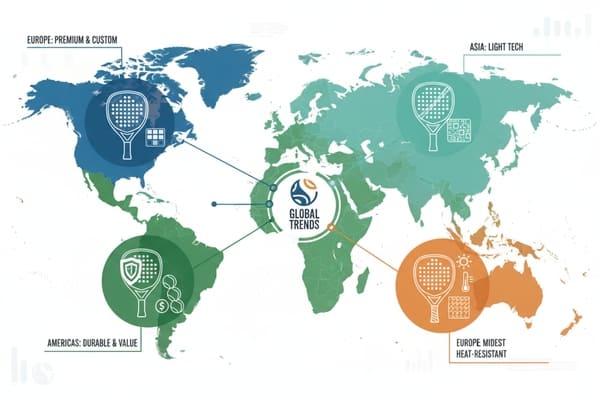
I work directly with distributors across four continents at Padel Keeper. Each market tells a different story about what players want, what climates demand, and what price points work. Let me share what I see happening right now and what is coming in 2026.
Why Do Padel Racket Preferences Differ Across Europe, America, Asia and the Middle East?
Player culture shapes equipment preferences more than most people realize. I notice this every time I speak with distributors from different regions. What sells incredibly well in Spain barely moves in Dubai.
Regional differences in padel racket preferences stem from four main factors: playing style traditions1, climate conditions, market maturity levels2, and price sensitivity. European players favor control-oriented rackets, Americans want power, Asian markets demand innovation, and Middle Eastern players need durability in extreme heat3.
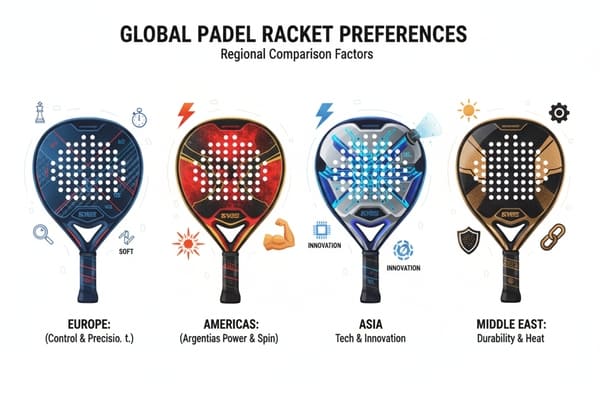
Let me start with Europe because it represents the most mature padel market. Spain and Italy dominate European padel culture. Players there grew up watching professional matches. They understand technical nuances. They want rackets that offer precise control and strategic play capabilities. When I ship rackets to Spanish distributors, they request specific balance points, usually 265-270mm from the handle. They want carbon fiber faces with medium-soft foam cores. These specifications allow skilled players to execute drop shots, lobs, and precise passing shots.
The European market also shows strong brand loyalty. Players recognize quality materials. They pay premium prices for rackets using 12K or 18K carbon fiber. A Spanish distributor told me last month that his customers will not consider rackets below €120. They associate low prices with poor quality. This mindset creates opportunities for manufacturers like PDK who focus on premium materials and craftsmanship.
America tells a different story. Padel is newer there, especially in the United States. Many players come from tennis or racquetball backgrounds. They bring aggressive playing styles. They want rackets that generate power with less effort. American distributors request heavier rackets, typically 370-385 grams, with higher balance points around 275-280mm. These specifications suit players who rely on strength and aggressive shots rather than finesse.
Price sensitivity runs higher in American markets too. Padel competes with established racquet sports. Players experiment before committing. They want good value, not necessarily the absolute highest quality. A California distributor explained that his sweet spot sits between $80-$140 per racket. Above that price, sales drop significantly. This creates demand for solid mid-range products with good marketing rather than ultra-premium offerings.
Asian markets surprise many people with their technology focus. Japan, China, and South Korea embrace innovation faster than other regions. Players there want the latest materials, the newest designs, the most advanced features. I see this in their purchasing patterns. When we introduce rackets using new foam technologies or unconventional shapes, Asian distributors request samples immediately.
Weight matters differently in Asia. Many players, especially women and younger athletes, prefer lighter rackets around 340-360 grams. They prioritize maneuverability over raw power. Our lightest racket designs sell best in Japan and South Korea. These same designs move slowly in Spain where players view light rackets as lacking substance.
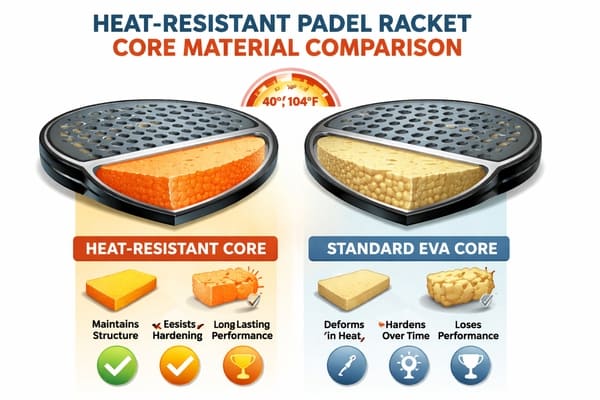
The Middle East presents unique challenges. Dubai, Abu Dhabi, and Saudi Arabia have invested heavily in padel infrastructure. Wealthy players want premium equipment, similar to Europe. But climate creates different requirements. Summer temperatures exceed 45°C regularly. Standard racket materials deteriorate faster. Foam cores can break down. Adhesives fail. Carbon fiber delaminates.
Middle Eastern distributors request specific modifications. They want rackets tested in high-heat conditions. They need UV-resistant surface treatments4. They demand longer warranties because equipment wears faster. A Dubai distributor told me he refuses to stock rackets without heat-resistance guarantees. He lost too much money replacing failed equipment in the past.
Here is how regional preferences compare:
| Region | Weight Preference | Balance Point | Price Range | Key Priority | Climate Factor |
|---|---|---|---|---|---|
| Europe (Spain/Italy) | 365-375g | 265-270mm | €120-€250 | Control & precision | Moderate, all-season play |
| America (US/Mexico) | 370-385g | 275-280mm | $80-$140 | Power & value | Variable, indoor/outdoor mix |
| Asia (Japan/Korea) | 340-360g | 260-265mm | $100-$200 | Technology & innovation | Humid, indoor preference |
| Middle East (UAE/Saudi) | 360-375g | 268-275mm | $150-$300 | Durability & heat resistance | Extreme heat, UV exposure |
Market maturity also drives preferences. Spain has thousands of dedicated padel courts. Players understand equipment nuances. They know what 12K carbon means versus 3K carbon. They feel balance point differences. They demand specific specifications. Less mature markets like the United States or China have players still learning the sport. They rely more on brand reputation and general quality impressions rather than technical specifications.
What Are the Key Technological Trends in Padel Equipment for 2026?
Technology moves faster than many manufacturers can adapt. I spend considerable time researching emerging materials and design innovations because distributors ask me constantly about what is coming next. They want to stay ahead of competitors.
The major technological trends for 2026 include hybrid carbon-basalt fiber composites, smart racket sensors for performance tracking, eco-friendly recycled materials5, and 3D-printed custom components. These innovations address player demands for better performance, sustainability, and personalization.
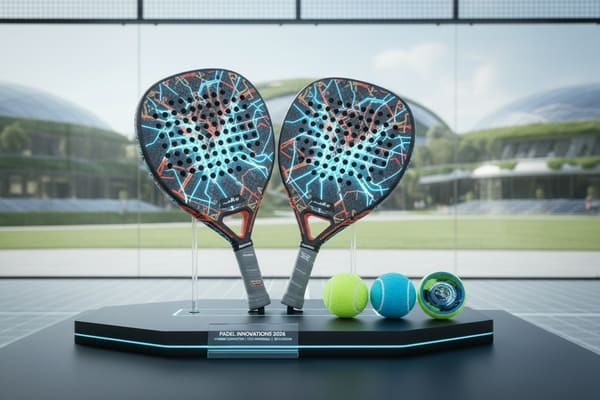
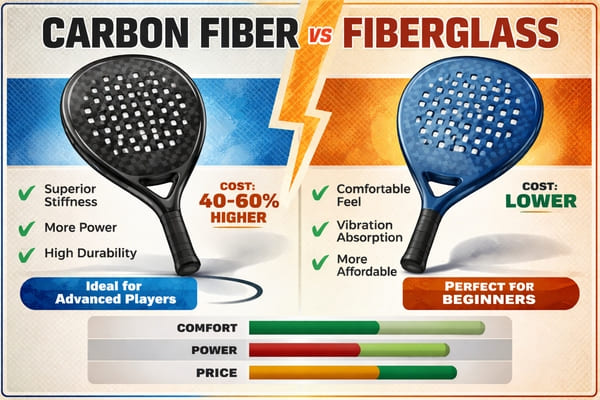
Material science drives most innovation in padel equipment right now. Carbon fiber has dominated racket faces for years. But costs have increased, and players want differentiation. We are now testing hybrid composites that blend carbon with basalt fibers. Basalt comes from volcanic rock. It offers similar stiffness to carbon but costs less and provides better vibration damping. Early tests at PDK show basalt-carbon hybrids reduce arm fatigue by 15-20% compared to pure carbon designs.
Several European distributors have already requested samples of our basalt-hybrid rackets. They see this as a competitive advantage. Players feel the difference immediately. Less vibration means longer playing sessions without discomfort. Marketing this benefit is easy because players can test it themselves in minutes.
Foam core technology is evolving too. Traditional EVA foam works well but has limitations. It hardens in cold weather and softens in heat. New polymer foams maintain consistent properties across wider temperature ranges. This matters especially for Middle Eastern and Nordic markets with extreme climates. At PDK, we are working with a foam supplier who developed a heat-stabilized core that maintains performance up to 55°C. This innovation solves a major pain point for Gulf region distributors.
Smart technology integration represents the biggest trend shift coming in 2026. Tennis rackets already incorporate sensors that track swing speed, impact location, and stroke types. Padel is following this path. We are developing rackets with embedded sensors that connect to smartphone apps. Players can analyze their games, track improvement, and share data with coaches.
I know this sounds futuristic, but the technology already exists. The challenge is integration without adding significant weight or cost. Our current prototype adds only 8 grams and costs an additional $25 in manufacturing. For premium rackets priced above $200, this becomes viable. European and American markets show the most interest so far. Asian markets will likely adopt this technology fastest once it launches.
Sustainability has moved from optional to essential. European regulations increasingly require recyclable materials and reduced environmental impact. Players, especially younger ones, care about eco-friendly products. We are testing rackets made with recycled carbon fibers and bio-based resins. Performance matches traditional materials, but the marketing message resonates strongly with environmentally conscious buyers.
One Italian distributor told me his customers ask about sustainability regularly. He wants to offer "green" options by 2026. We are developing a product line specifically for this demand. The rackets will feature recycled materials, biodegradable packaging, and carbon-neutral shipping. Premium pricing is expected, but market research suggests 20-30% of European players will pay extra for sustainable products.
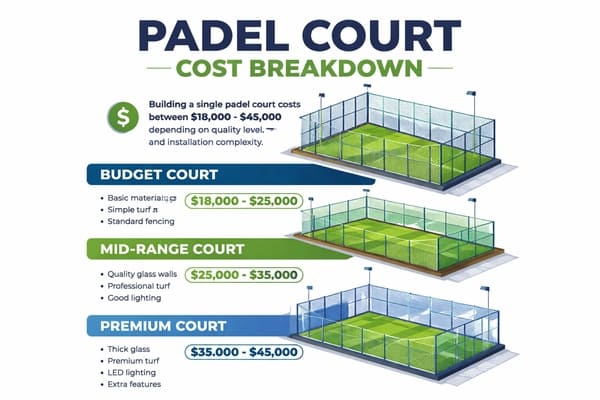
Court technology advances too, not just rackets. Glass court walls are becoming more popular than traditional metal fencing. Glass provides better visibility for spectators and creates a more premium atmosphere. We are seeing increased demand for panoramic courts, especially in Europe and the Middle East where clubs want to attract high-end clientele.
LED lighting integration in courts6 represents another trend. Traditional overhead lighting creates shadows and glare. New LED systems embed in court frames or walls, providing even illumination without hotspots. This technology costs more initially but reduces energy consumption by 60-70%. Dutch and German distributors show particular interest because energy costs there are high.
Surface materials are evolving as well. Artificial turf remains standard, but next-generation versions offer better drainage, longer life, and more consistent ball bounce. We are testing a new turf with increased sand infill density that reduces joint impact by 25%. This appeals to older players concerned about knee and ankle health.
Customization technology is advancing rapidly. 3D printing allows manufacturers to create custom grip sizes, handle shapes, and even personalized racket frames. While full 3D-printed rackets are not yet commercially viable, hybrid approaches work well. We can 3D-print custom grips and handles, then attach them to traditional racket faces. This gives players personalized fit without completely custom manufacturing costs.
Here is a comparison of emerging technologies:
| Technology | Availability | Performance Benefit | Cost Impact | Regional Interest |
|---|---|---|---|---|
| Basalt-Carbon Hybrid | Available now | 15-20% vibration reduction | +$15-$20 | Europe, America |
| Heat-Stabilized Foam | Q2 2025 | Consistent in extreme temperatures | +$8-$12 | Middle East, America |
| Smart Sensors | Q4 2025 | Performance tracking & analysis | +$25-$35 | Europe, Asia |
| Recycled Materials | Available now | Environmental appeal | +$10-$18 | Europe, Asia |
| 3D-Printed Components | Testing phase | Custom fit & feel | +$20-$40 | Europe, America |
| Panoramic Glass Courts | Available now | Premium aesthetics | +30% court cost | Europe, Middle East |
Ball technology deserves mention too. Players complain about balls losing pressure too quickly. New pressurization technologies extend playable life by 40-50%. This reduces cost per playing hour and appeals to club managers watching budgets. We are seeing strong interest from American and Asian markets where clubs operate on tighter margins than European facilities.
How to Choose the Best Padel Gear Based on Regional Climate and Court Conditions?
Climate affects equipment performance7 more than most distributors realize. I learned this the hard way when a shipment of rackets failed in Dubai three years ago. The foam cores collapsed in high heat. Since then, climate matching8 has become a central part of how I advise clients.
Choosing the right padel gear for your region requires matching materials and specifications to local temperature ranges, humidity levels, UV exposure, and typical playing environments. Hot climates need heat-resistant cores and UV protection9, cold regions require flexible materials, and humid areas demand moisture-resistant components.
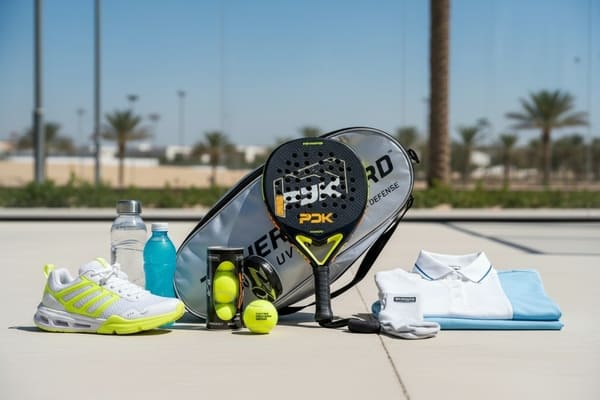
Let me start with hot climate considerations because they are most critical. The Middle East, parts of Spain in summer, and southern United States all experience temperatures above 35°C regularly. Standard EVA foam softens significantly at these temperatures. Rackets lose responsiveness. The sweet spot feels mushy. Shots lack power and control.
For hot climates, I recommend rackets with thermally-stable foam10 cores. These specialized foams maintain their properties up to 55°C. Yes, they cost slightly more, but they perform consistently. Ball selection matters too. Standard pressurized balls lose pressure faster in heat. Consider using pressureless balls11 for practice and save premium pressurized balls for matches. This reduces operating costs significantly.
UV exposure damages equipment in sunny climates. Carbon fiber faces can delaminate if UV rays break down bonding adhesives. Look for rackets with UV-resistant clear coats or colored finishes that include UV inhibitors. Court surfaces also need UV protection9. Artificial turf without UV stabilizers fades and weakens within two years. Specify UV-stabilized turf for outdoor installations in sunny regions.
Storage becomes critical in hot climates. Never leave rackets in car trunks where temperatures can reach 70°C. Advise your customers to store equipment indoors at moderate temperatures. This simple practice extends equipment life by 50-80% in hot regions. I always include this guidance in marketing materials for Middle Eastern distributors.
Cold climate requirements differ completely. Northern Europe, Canada, and northern United States experience winter temperatures well below freezing. EVA foam hardens in cold, making rackets feel stiff and uncomfortable. Players experience more arm vibration and reduced control. Ball bounce becomes inconsistent as balls lose pressure in cold air.
For cold climates, I recommend rackets with softer foam cores, typically rated at 25-30 durometer rather than 30-35 durometer used in warmer regions. These softer cores maintain playability in cold conditions. Grip materials also matter. Some synthetic grips become slippery when cold. Recommend grips with cold-weather compounds12 or absorbent overgrips that work well in winter gloves.
Indoor versus outdoor play changes equipment needs too. Indoor facilities maintain controlled temperatures and humidity. Equipment performs consistently. You can use standard specifications. Outdoor courts expose equipment to weather extremes, UV radiation, and moisture. This demands more durable materials and protective finishes.
Humidity creates its own challenges. Coastal regions like Netherlands, parts of Italy, and coastal Asia experience high humidity year-round. Moisture can penetrate racket cores through small cracks or imperfect seals. Once inside, moisture causes foam degradation and delamination. Look for rackets with sealed edge strips that prevent moisture intrusion. Some manufacturers inject cores with moisture-resistant coatings during production. PDK uses this process for all rackets destined for humid climates.
Court surface selection depends heavily on climate. Artificial turf works well in dry climates but requires excellent drainage systems in wet regions. Poor drainage leads to standing water, moss growth, and accelerated surface degradation. For very wet climates, consider concrete surfaces with acrylic coatings instead of turf. These surfaces drain faster and resist moisture damage better.
Altitude affects ball performance significantly. High-altitude locations like parts of Spain, Switzerland, and mountain resorts in America see reduced air pressure. Balls bounce higher and move faster. Players accustomed to sea-level play find the game feels different. For high-altitude venues, slightly lower pressure balls create more normal bounce characteristics. This small adjustment improves player satisfaction considerably.
Wind presents challenges for outdoor courts. Coastal locations and open areas experience regular strong winds. Wind affects ball flight, frustrates players, and can even damage lighter equipment. For windy locations, consider courts with higher walls or wind screens13. Heavier balls also help, though they change game feel. Some facilities simply close outdoor courts on very windy days and focus on indoor options.
Here is a climate-based equipment selection guide:
| Climate Type | Temperature Range | Racket Specifications | Ball Type | Court Considerations | Special Requirements |
|---|---|---|---|---|---|
| Hot & Dry (Middle East, Southern Spain) | 30-50°C | Heat-stable foam, UV coating | Pressureless or premium pressurized | UV-stable turf, shade structures | Indoor storage, frequent equipment checks |
| Cold (Northern Europe, Canada) | -5 to 15°C | Soft foam (25-30 durometer), cold-grip handles | Standard pressurized | Indoor preferred, heated outdoor | Pre-play equipment warming |
| Humid (Coastal areas) | 15-30°C, 70%+ humidity | Sealed edges, moisture-resistant cores | Standard pressurized | Excellent drainage systems | Regular equipment drying |
| Moderate (Central Europe) | 10-25°C | Standard specifications | Standard pressurized | All court types work | Seasonal storage considerations |
| High Altitude (Mountains) | Variable | Standard specifications | Slightly lower pressure | Standard courts | Altitude-specific ball selection |
Maintenance schedules should adapt to climate too. Hot climates accelerate wear. Inspect rackets monthly for delamination signs. Replace grips more frequently as sweat and heat degrade materials faster. In humid climates, focus on moisture damage prevention. Store equipment in climate-controlled spaces with dehumidifiers if possible. Cold climates require less frequent maintenance but need careful spring inspections after winter storage.
I advise distributors to educate customers about climate-specific care14. Create simple guides that explain storage, maintenance, and usage best practices for local conditions. This reduces return rates and builds customer loyalty. Players appreciate advice that helps their equipment last longer and perform better.
Conclusion
Padel equipment trends reflect regional preferences shaped by climate, culture, and market maturity. Success
-
Exploring this can reveal how cultural influences shape preferences in sports. ↩
-
This insight can guide manufacturers in targeting their products effectively. ↩
-
This knowledge is crucial for players in hot climates to ensure equipment longevity. ↩
-
Exploring this can help players understand how to protect their gear in harsh conditions. ↩
-
Discover how sustainable materials are changing the game for environmentally conscious athletes. ↩
-
Learn about the advantages of LED lighting for better visibility and energy savings. ↩
-
Explore the relationship between climate and equipment performance to make informed gear choices. ↩
-
Understanding climate matching can help you choose the right gear for optimal performance in your region. ↩
-
Discover the significance of UV protection in prolonging the life of your padel gear in sunny environments. ↩ ↩
-
Find out how thermally-stable foam maintains performance in extreme heat, crucial for players in hot climates. ↩
-
Learn why pressureless balls are a cost-effective choice for practice, especially in hot conditions. ↩
-
Understand how cold-weather compounds improve grip performance in chilly conditions, enhancing player comfort. ↩
-
Find out how wind screens can improve playability and protect equipment in windy outdoor conditions. ↩
-
Learn how climate-specific care can enhance the performance and longevity of your padel gear. ↩