What Are the Essential Padel Ball Techniques for Beginners?
New padel players often feel overwhelmed by complex techniques and confusing rules. They waste months developing bad habits that hurt their game development and enjoyment.
Beginners should master five core techniques: forehand and backhand groundstrokes, volleying, serving, and wall play. Understanding the 40-40 scoring rule, proper court positioning, and basic shot selection creates a strong foundation for rapid skill improvement.
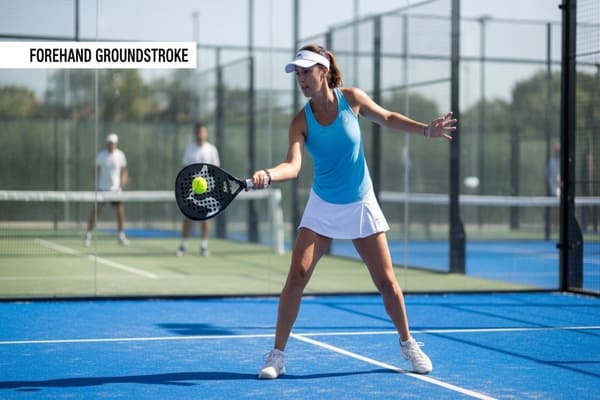
I’ve trained countless new players through our distributor network’s club partnerships. The players who focus on fundamentals first always progress faster than those trying advanced techniques too early.
What Is the 40-40 Rule in Padel?
Many beginners get confused during close games because they don’t understand padel’s unique scoring system. This confusion disrupts their focus and affects performance during critical points.
The 40-40 rule in padel means "deuce" where the score is tied at 40-40. The next point winner gains "advantage," and if they win the following point, they win the game. If they lose, the score returns to deuce until one player wins two consecutive points.
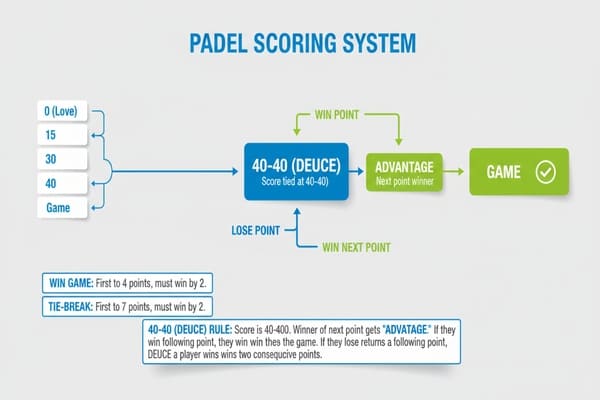
Understanding padel scoring helps beginners stay mentally focused during matches. Here’s the complete breakdown:
Padel Scoring System Explained
| Score Progression | Term | What It Means |
|---|---|---|
| 0 points | Love | Starting score |
| 1 point | 15 | First point won |
| 2 points | 30 | Second point won |
| 3 points | 40 | Third point won |
| 4 points (leading by 2) | Game | Game winner |
| 40-40 | Deuce | Tied score |
| After deuce win | Advantage | One point from winning |
The deuce situation creates high-pressure moments that test mental strength and technique. When scores reach 40-40, players must win two consecutive points to claim the game. This rule prevents games from ending on lucky shots and rewards consistent performance.
During advantage situations, the serving team typically has a slight edge because they control point initiation. However, the receiving team can neutralize this advantage through aggressive returns1 and smart positioning. Understanding this dynamic helps beginners make better tactical decisions.
The scoring system derives from tennis but follows identical rules in padel. Games combine into sets, and sets combine into matches. Most recreational matches use a best-of-three sets format, with each set going to six games. Players must win by two games, creating potential tiebreak situations2 at 6-6.
Tiebreaks occur when sets reach 6-6, using a first-to-seven-points format. Players must win by two points, so tiebreaks can extend beyond 7-6 scores. The serving order rotates every two points during tiebreaks, creating dynamic momentum shifts.
How to Play Padel Ball for Beginners?
Too many beginners jump straight into matches without learning proper fundamentals. This leads to frustration, poor technique development, and potential injuries from incorrect movements.
Beginners should start by learning the basic grip, mastering groundstrokes from the baseline, practicing simple volleys, understanding wall rebounds, and developing consistent serves. Focus on controlled shots over power and maintain proper court positioning throughout points.
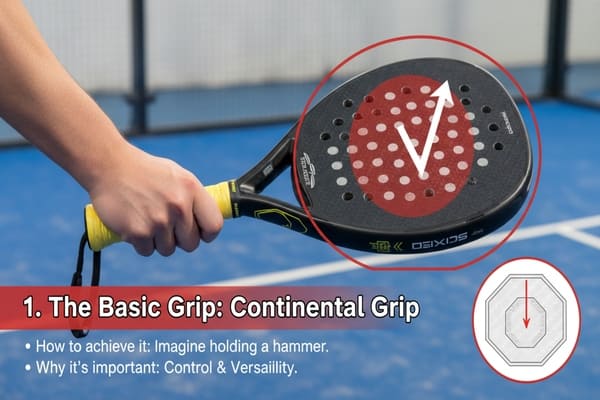
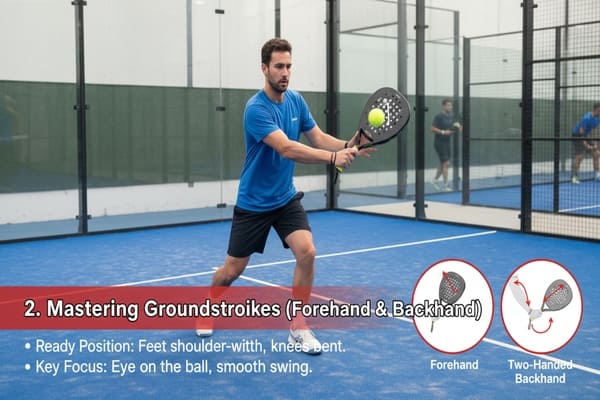
Starting with correct fundamentals accelerates skill development and prevents bad habits. Here’s my structured approach for new players:
Beginner Learning Progression
-
Essential Grip Technique:
- Use continental grip (handshake position)
- Hold racket with relaxed but firm pressure
- Keep wrist stable during contact
- Position hand at handle base for control
- Practice grip changes between shots
-
Fundamental Groundstrokes:
- Start with short backswing
- Make contact at waist height
- Follow through toward target
- Use legs for power generation
- Aim for consistency over speed
- Practice both forehand and backhand equally
-
Basic Volley Technique:
- Position at service line initially
- Keep racket head above wrist level
- Use short, punching motions
- Block fast balls rather than swinging
- Move forward after volleys when safe
- Develop soft touch for drop volleys
-
Simple Wall Play:
- Stand 2-3 meters from back wall
- Let ball bounce before wall contact
- Anticipate rebound angles
- Use walls as offensive opportunities
- Practice both direct wall shots and after-bounce returns
- Develop spatial awareness around glass walls
The serving technique requires special attention because it starts every point. Beginners should use underhand serves3 hit below waist level, focusing on placement over power. Aim for the opponent’s backhand corner or directly at their body to limit return options.
Court positioning fundamentals separate good beginners from struggling ones. Start points at the baseline, move forward after strong shots, and retreat when opponents gain offensive advantage. Never stand in "no man’s land" between baseline and service line where you’re vulnerable to both fast balls and drop shots.
Partner communication becomes critical in doubles play, which most beginners start with. Call "mine" or "yours" clearly on every ball. The player closest to the ball typically takes the shot. Develop simple hand signals for basic strategies like poaching or switching sides.
Footwork patterns need emphasis from the beginning. Use small adjustment steps rather than large lunges. Stay on your toes for quick reactions. Move sideways with shuffle steps instead of crossing feet. Return to center position after each shot to maintain optimal court coverage.
What Are Some Basic Padel Strategies?
Beginners often hit balls randomly without thinking about point construction. This reactive approach leads to inconsistent results and prevents them from controlling match outcomes.
Basic padel strategies include controlling the net position, hitting deep baseline shots, targeting opponent weaknesses, using lob shots strategically, and maintaining consistent depth. Avoid risky winners early in points and build attacks through high-percentage shots.
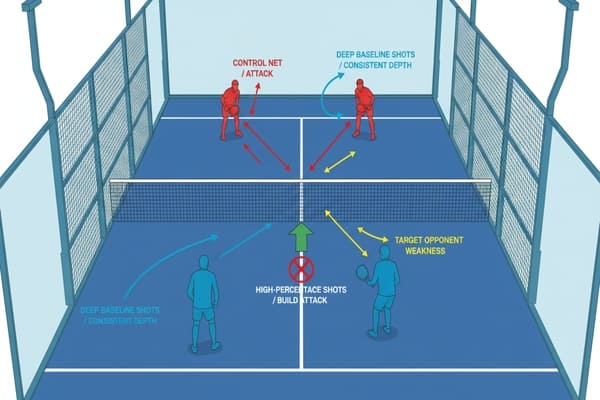
Strategic thinking transforms random hitting into purposeful point construction. Here are the fundamental strategies every beginner needs:
Core Strategic Principles
| Strategy Element | Implementation | Expected Outcome |
|---|---|---|
| Net Dominance | Move forward after strong shots | Control point tempo |
| Depth Control | Hit beyond service line | Push opponents back |
| Target Selection | Aim at opponent’s backhand | Create weak returns |
| Lob Usage | Lift balls over net players | Regain defensive position |
| Consistency First | Choose high-percentage shots | Reduce unforced errors |
Net positioning provides the biggest strategic advantage in padel. Teams controlling the net win approximately 70% of points because they dictate pace and angles. Move forward together as a team after hitting deep shots or forcing weak returns. Never let one player advance alone while their partner stays back.
Shot depth management controls rally dynamics. Deep shots (landing beyond the service line) push opponents toward the baseline, reducing their attacking options. Shallow shots invite opponents forward where they can apply pressure. Beginners should aim for consistent depth until they develop touch for strategic short balls.
Targeting specific zones maximizes pressure on opponents. Most players have weaker backhands, making this the primary target area. The middle zone between partners creates confusion about shot responsibility. Down-the-line shots exploit court geometry by creating difficult angles for recovery.
The lob shot serves multiple strategic purposes beyond simply getting balls over opponents’ heads. Defensive lobs buy recovery time when you’re out of position. Offensive lobs (hit with topspin) force opponents off the net. Practice lobs to different depths depending on opponent positioning and speed.
Pattern play builds consistency and confidence. Develop reliable shot sequences like serve-volley-smash or return-lob-baseline rally. These patterns create rhythm and reduce decision-making pressure during points. Advanced players eventually break patterns strategically, but beginners benefit from predictable sequences.
Wall strategy opens unique tactical opportunities unavailable in other racket sports. Use back walls to retrieve seemingly impossible shots. Side walls create angle changes that confuse opponents. The vibora (off the back wall smash) becomes a signature shot once you master basic wall timing and positioning.
Patience separates winning beginners from frustrated ones. Resist the temptation to attempt spectacular winners on every shot. Build points through consistent, high-percentage plays that force opponents into errors. Most beginner points end in mistakes rather than winners, so simply keeping balls in play often succeeds.
Conclusion
Mastering padel fundamentals requires understanding the 40-40 scoring rule, developing proper technique for groundstrokes and volleys, and implementing basic strategies like net positioning and shot depth control. Focus on consistency and fundamentals before attempting advanced techniques for fastest skill development.
-
Exploring this link will enhance your understanding of aggressive returns and their strategic importance in padel. ↩
-
This resource will provide insights into tiebreak strategies, crucial for improving your game in competitive scenarios. ↩
-
Explore this link to understand how underhand serves can enhance your game and surprise your opponents. ↩