What Are the Health Benefits of Playing Padel Ball?
Many people think padel is just a fun social sport without serious fitness benefits. This misconception prevents them from discovering one of the most effective full-body workouts available today.
Playing padel provides exceptional cardiovascular exercise, burns 400-600 calories per hour, strengthens muscles throughout the body, and improves coordination and mental health. Regular play reduces heart disease risk while being low-impact on joints compared to running or tennis.

I’ve witnessed remarkable health transformations in padel players across our distributor networks. The sport combines intense physical activity with social engagement, creating sustainable fitness habits that last.
Is Playing Padel Good for Health?
Too many people start expensive gym memberships they never use. They need an engaging activity that doesn’t feel like work but delivers real fitness results.
Playing padel improves cardiovascular health1, burns significant calories, enhances coordination, strengthens bones, and boosts mental wellbeing through social interaction. The sport provides a complete workout while remaining accessible to various fitness levels and age groups.
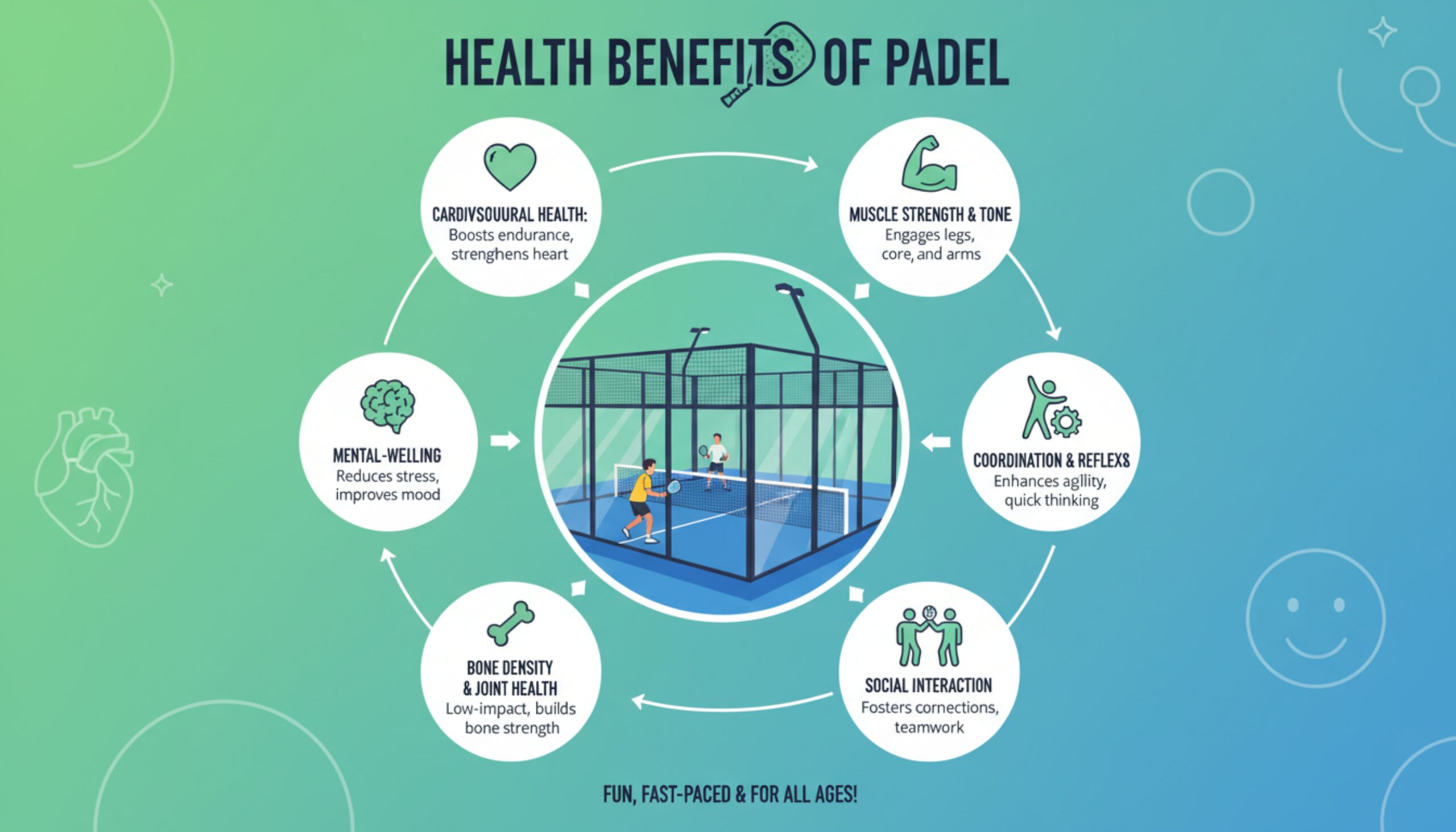
The health advantages of padel extend far beyond basic exercise. Here’s what research and player experiences show:
Complete Health Benefits Overview
| Health Area | Specific Benefits | Impact Level |
|---|---|---|
| Cardiovascular | Heart rate 120-160 bpm | High |
| Calorie Burn | 400-600 calories/hour | High |
| Muscle Strength | Full body engagement | Medium-High |
| Joint Impact | Low stress on knees | Low |
| Mental Health | Stress reduction | High |
| Social Connection | Team interaction | High |
Cardiovascular improvements happen quickly with regular padel play. The constant movement pattern of rallies, short sprints, and directional changes keeps your heart rate elevated in the optimal fat-burning zone. Unlike monotonous treadmill running, the game’s engaging nature makes time fly by.
Weight management becomes easier through padel because the sport burns substantial calories without feeling like torture. A typical one-hour match burns between 400-600 calories depending on intensity and player weight. This matches or exceeds many traditional cardio exercises while being far more enjoyable.
Bone density increases through the weight-bearing movements involved in padel. The impact from running, jumping, and quick stops stimulates bone formation, particularly important for preventing osteoporosis as we age. This benefit occurs without the harsh joint stress of high-impact sports.
Flexibility and balance improve naturally through padel’s varied movement patterns. Players constantly stretch, reach, twist, and adjust body position during play. These movements enhance overall mobility and reduce injury risk in daily activities.
Mental health benefits may be padel’s most underrated advantage. The sport combines physical exertion with social engagement and strategic thinking. This combination reduces stress, anxiety, and depression while improving cognitive function and mood.
Can You Build Muscle Playing Padel?
Many athletes believe only weight training builds muscle effectively. They overlook how sport-specific movements create functional strength that transfers to real-world activities.
Playing padel builds significant muscle in legs, core, shoulders, and arms through explosive movements, rotational power, and sustained activity. While not matching bodybuilding results, padel develops lean, functional muscle with improved endurance and athletic performance.
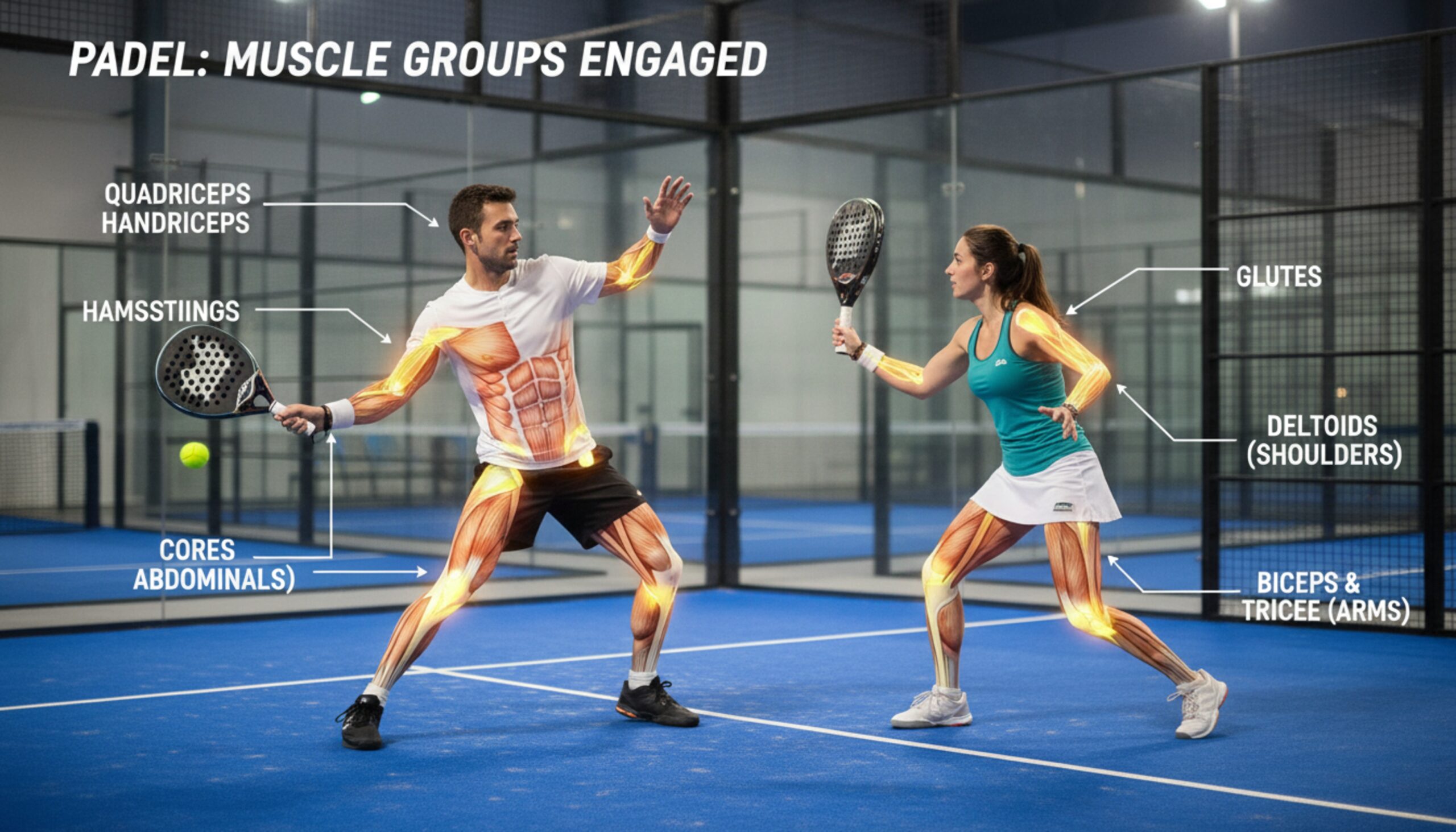
Padel creates a unique muscle-building stimulus through its movement patterns and intensity:
Muscle Development by Body Area
-
Lower Body Muscles:
- Quadriceps and hamstrings from constant direction changes
- Calves from explosive acceleration and stopping
- Glutes from lunging and jumping movements
- Hip flexors from lateral movements and rotations
- Development: High volume, endurance-focused strength
-
Core Muscles:
- Obliques from rotational hitting movements
- Rectus abdominis from stability during shots
- Lower back from maintaining posture
- Deep stabilizers from balance requirements
- Development: Functional strength with power transfer
-
Upper Body Muscles:
- Shoulders from overhead smashes and serves
- Forearms from grip strength and racket control
- Chest and back from swing mechanics
- Triceps and biceps from shot power generation
- Development: Muscular endurance with explosive power
The muscle-building process in padel differs from traditional resistance training. Instead of isolated muscle work with heavy weights, padel creates integrated movement patterns requiring multiple muscle groups working together. This builds functional strength that improves athletic performance.
Repetitive swing patterns create muscular adaptations similar to resistance training. A typical match includes 200-300 racket swings with varying intensity levels. This volume stimulates muscle protein synthesis2, particularly in the dominant arm and shoulder complex.
Leg muscle development happens through hundreds of mini-sprints, stops, and directional changes during each match. These movements build explosive power in fast-twitch muscle fibers3 while developing muscular endurance in slow-twitch fibers. The result is lean, toned legs with excellent functional capacity.
Core strength improves dramatically because every shot requires torso rotation and stability. The constant engagement of core muscles throughout play builds deep stabilizer strength that prevents back pain and improves posture in daily life.
Is Padel Good for the Heart?
Heart disease remains the leading cause of death worldwide. Many people know they should exercise more but struggle finding activities they’ll actually maintain long-term.
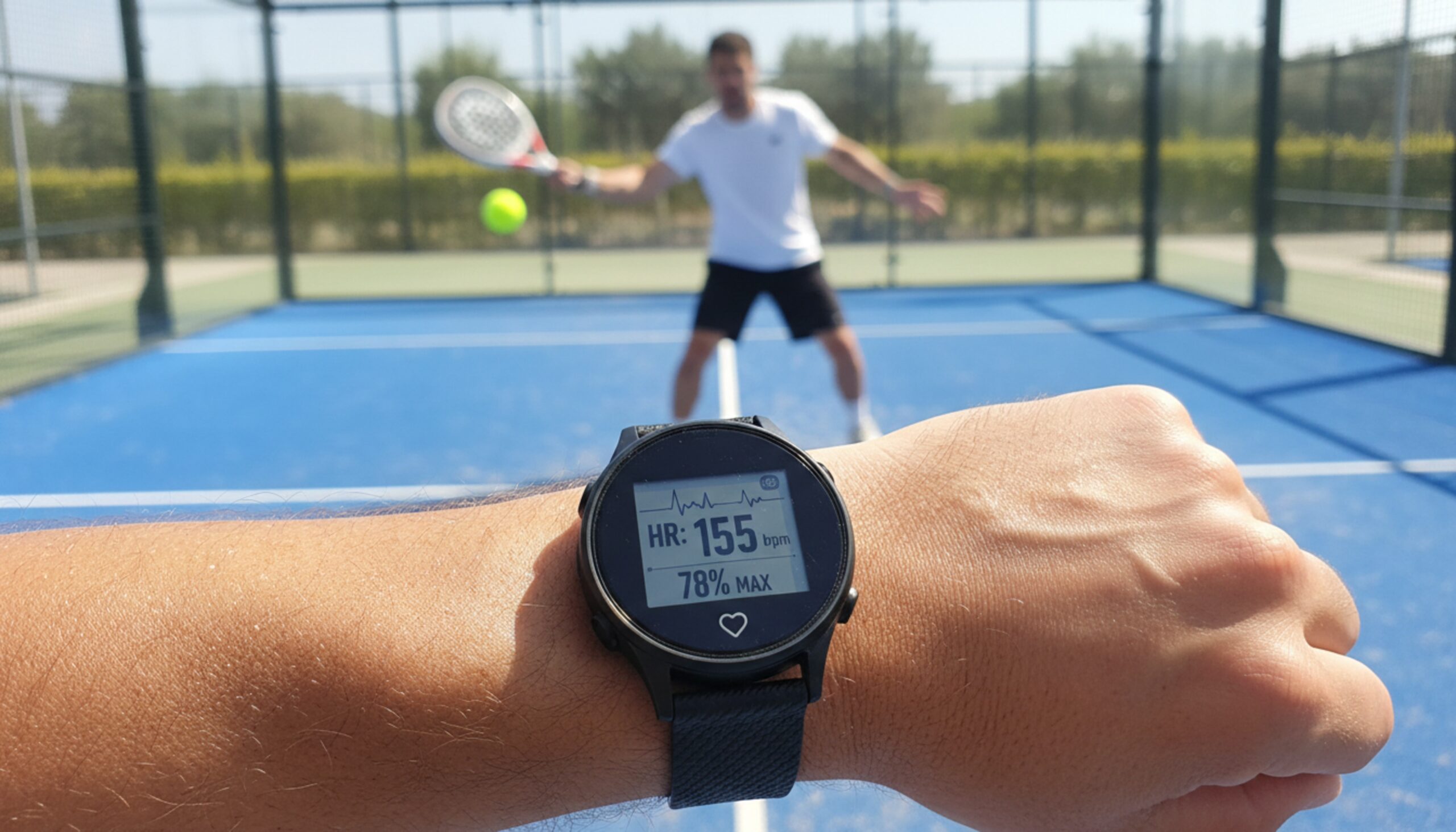
Padel provides excellent cardiovascular exercise4 with heart rates reaching 70-85% of maximum during active play. Regular sessions improve heart efficiency5, lower blood pressure, reduce bad cholesterol, and decrease heart disease risk6 by up to 30-40% compared to sedentary lifestyles.
The cardiovascular benefits of padel make it one of the most heart-healthy recreational activities available:
Cardiovascular Impact Analysis
| Cardiovascular Measure | Effect from Padel | Timeframe |
|---|---|---|
| Resting Heart Rate | Decrease 5-10 bpm | 3-6 months |
| Blood Pressure | Reduce 5-10 mmHg | 2-4 months |
| LDL Cholesterol | Decrease 10-15% | 3-6 months |
| HDL Cholesterol | Increase 5-10% | 3-6 months |
| VO2 Max | Improve 15-20% | 4-8 months |
| Heart Disease Risk | Reduce 30-40% | Long-term |
Heart rate during padel play varies with rally intensity but consistently stays in beneficial training zones. During active points, heart rates typically reach 140-170 beats per minute for most players. Between points, rates drop to 100-120 bpm, creating interval training effects that maximize cardiovascular adaptation.
Blood pressure improvements occur through multiple mechanisms. The aerobic exercise dilates blood vessels, improving circulation efficiency. The social and enjoyable nature of padel reduces stress hormones that elevate blood pressure. Regular players often see systolic pressure drop by 5-10 points within months.
Cholesterol profiles improve significantly with consistent padel play. The sustained aerobic activity increases HDL (good) cholesterol while reducing LDL (bad) cholesterol and triglycerides. This combination dramatically reduces arterial plaque buildup and heart attack risk.
Stroke volume and cardiac output increase as the heart becomes more efficient through regular padel training. A stronger heart pumps more blood with each beat, reducing the total number of beats needed daily. This decreased workload extends heart longevity and reduces cardiovascular strain.
The interval nature of padel provides superior cardiovascular benefits compared to steady-state exercise. The alternating periods of high intensity and recovery mirror high-intensity interval training7 (HIIT), which research shows delivers maximum heart health improvements in minimum time.
Long-term heart disease prevention makes padel particularly valuable. Studies show regular racket sport players have 40-50% lower cardiovascular mortality rates compared to inactive individuals. The combination of aerobic exercise, social engagement, and stress reduction creates powerful protective effects.
Conclusion
Playing padel delivers comprehensive health benefits including excellent cardiovascular exercise, functional muscle development, and heart disease prevention. The sport combines effective fitness training with social enjoyment, creating sustainable health improvements that last a lifetime.
-
Discover how padel can enhance your heart health and overall fitness through engaging gameplay. ↩
-
Understanding muscle protein synthesis is crucial for optimizing training and recovery, enhancing your athletic performance. ↩
-
Exploring methods to develop explosive power can significantly improve your performance in sports and physical activities. ↩
-
Understanding cardiovascular exercise can help you appreciate how activities like padel improve heart health. ↩
-
Understanding heart efficiency can help you optimize your exercise routine for better heart health. ↩
-
Explore effective strategies to lower your heart disease risk and improve overall health. ↩
-
Discover how interval training can enhance cardiovascular fitness and overall health. ↩